Drop off your CV
We'd love to hear from you. Send us your CV and one of our specialist consultants will be in touch.


The global aerospace sector faces a critical skills gap as advanced eVTOL aircraft development and hydrogen propulsion systems scale faster than the aerospace talent pipeline can support. For organizations scaling next-gen aviation programs, the primary challenge is identifying and securing specialist aerospace engineers and test pilots with proven experience in aircraft certification, flight testing, and entry into service (EIS).
In this article, we explore the talent shortages shaping advanced aviation, the specialist roles in high demand, and what this means for organizations looking to scale next-generation aerospace programs.
Contact CSG Talent for specialist recruitment support across US aerospace programs.
Although the aerospace industry is attracting new talent, there is a shortage of professionals with extensive program experience in emerging aviation markets. Many businesses are hiring for roles requiring 5-10 years of specialist experience in sectors that have only recently become commercially active.
EVTOL manufacturers, hydrogen-electric developers, and advanced UAV companies all compete for the same specialized expertise. The global talent pool is limited because the necessary skills are typically developed within military aviation, major OEM programs, or elite flight test schools and cannot be fast-tracked.
As more advanced aviation companies move from prototype development into validation and certification phases, demand for Flight Test Engineers (FTEs), Certification Engineers, Airworthiness Specialists, and Experimental Test Pilots has increased rapidly.
Businesses can build engineering teams relatively quickly, but flight test and certification expertise takes years to develop because it relies on direct aircraft program exposure rather than theoretical knowledge alone.
The strongest FTEs have supported complete aircraft programs from testing strategy through to certification and operational approval. This limits the talent pool significantly, especially as multiple aerospace sectors compete for the same people simultaneously.
This has a major commercial impact, as delays in securing experienced certification or flight test professionals can slow approval timelines, delay commercial launch schedules, and increase pressure from investors expecting rapid deployment.
A massive surge in defense funding is placing further pressure on an already constrained aerospace talent market. The Pentagon is aggressively ramping up spending on advanced autonomous systems and next-generation aircraft like the Air Force's Collaborative Combat Aircraft (CCA) program.
These defense programs are competing directly against commercial Advanced Air Mobility (AAM) startups and civil aviation OEMs for the exact same pool of systems engineers, flight test professionals, and software specialists. This is changing hiring dynamics across the sector, as senior engineers and pilots are receiving multiple competing offers and counteroffers have become more common as businesses compete for passive candidates.
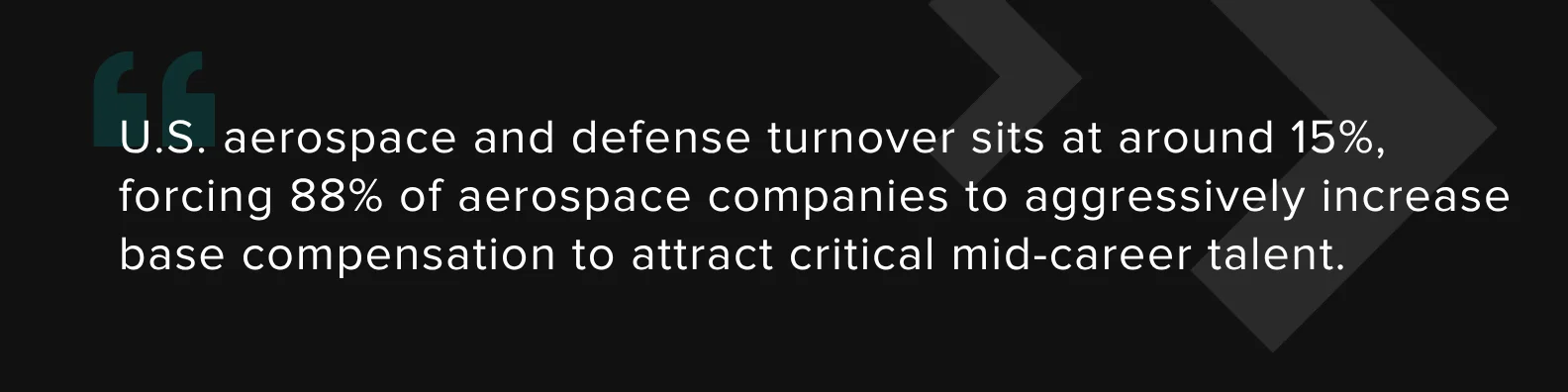
The defense sector has strong appeal due to its heavily venture-backed tech innovators, which combine the agility of a startup with the financial security of government contracts. U.S. aerospace and defense turnover sits at around 15%, which is more than double the national cross-industry average, forcing 88% of aerospace companies to aggressively increase base compensation to attract critical mid-career talent.
Flight Test Engineers are becoming increasingly sought after in the United States as programs enter serious flight testing and certification. They manage the entire test lifecycle, from aircraft instrumentation to data analysis, and their findings directly influence FAA certification decisions. Because this data acts as the foundation for overall aircraft airworthiness, this has become one of the market's most in-demand technical positions.
Operating prototype aircraft where performance, safety, and reliability are completely unproven requires a highly specialized skillset. A Government Accountability Office (GAO) review revealed that out of 23 electric aircraft type certification projects initiated with the FAA since 2018, only 6 have successfully achieved approval. This means that advanced aviation firms must run longer and more thorough test campaigns, keeping an already limited pool of experimental pilots focused on a few long-term projects.
Certification and airworthiness engineers are critical to U.S. aerospace success because they oversee the compliance strategies and safety cases required to clear next-gen aircraft for flight. Because the FAA lacks standardized rules for electric propulsion and advanced systems, approvals must be handled on a case-by-case basis. This forces aerospace manufacturers to hire strong internal certification teams who can guide under-resourced federal officials through the safety of their unique technology to secure approvals.
As modern aircraft becomes more software-dependent, the primary engineering challenge is now system compatibility. Engineers must ensure that innovative technologies, such as hydrogen-propulsion units, sync perfectly with the aircraft's existing digital flight-control computers. This has had an impact on salary expectations, with senior cross-system validation experts now earning a premium compared to those in standard engineering roles.
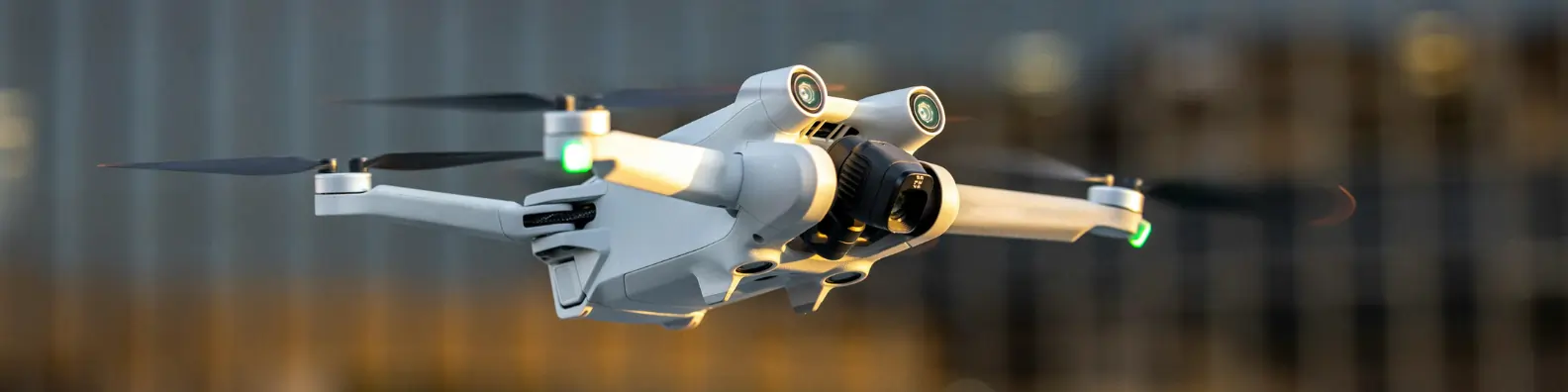
Demand for U.S. unmanned aviation talent has shifted from basic drone operations toward highly regulated deployments across the corporate and defense sectors. While the FAA has successfully certified over 330,000 remote pilots, the vast majority are restricted to basic, visual-line-of-sight tasks. There is a shortage of specialized operators who can handle complex Beyond Visual Line of Sight (BVLOS) missions, large-scale cargo logistics, and high-altitude autonomous defense platforms.
The U.S. advanced aviation sector has entered a phase where talent shortages are shaping program timelines just as much as technological advancements. The simultaneous push for commercialization across advanced military and civil aviation programs is driving strong demand for a limited pool of Flight Test Engineers, Designated Engineering Representatives (DERs), systems architects, and experimental test pilots.
Navigating this fierce competition requires forward-thinking aerospace firms to build proactive talent pipelines that tap directly into elite military branches and tier-one engineering programs. Ultimately, the main differentiator will be the strength of the specialized workforce capable of safely putting those complex systems into service.
As the sector continues to scale, access to experienced, program-ready talent determines how quickly and reliably new aircraft can be tested and certified before entering service.
At CSG Talent, we work across the US aerospace and advanced aviation market, partnering with OEMs, defense contractors, and emerging aircraft developers to identify and secure the industry experts required to support complex programs.
Contact our Aerospace and Defense Recruitment Specialists to secure senior-level talent.
Advanced aviation programs like eVTOL, UAV systems, and hydrogen-electric aircraft are scaling faster than professionals can gain full aircraft program experience, particularly in flight test and certification roles.
Flight Test Engineers, Experimental Test Pilots, Certification and Airworthiness Engineers, Systems Integration Engineers, and UAV/UAS specialists are currently the most sought after due to their direct impact on testing, certification, and program delivery.
These roles require years of hands-on exposure across full aircraft programs. That depth of experience is typically built in military aviation, OEM environments, or specialist test organizations, making the talent pool extremely limited.
Most high-demand aerospace candidates are not actively applying for roles. They are typically embedded in live programs and move through trusted networks. Specialist recruiters with deep sector knowledge and established relationships can access this passive talent pool more effectively, particularly in niche areas like flight test and certification.