Drop off your CV
We'd love to hear from you. Send us your CV and one of our specialist consultants will be in touch.


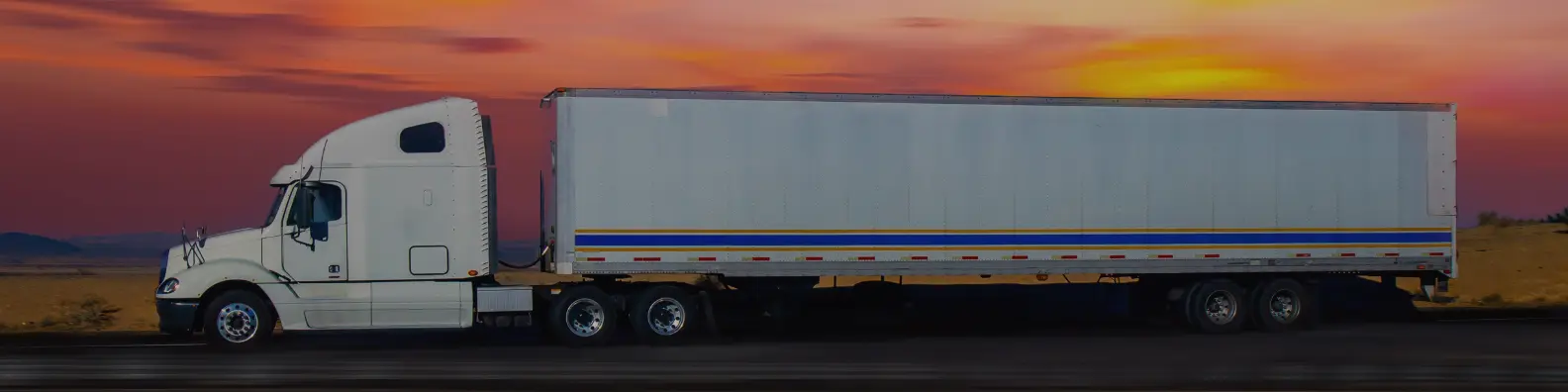
The US heavy-duty trucking industry is heading into 2027 with a mixed market outlook. Freight capacity is tightening and rates have increased in parts of the market, but equipment prices and financing costs are still making it hard to determine the ideal time to expand fleets.
Truck manufacturers and dealerships are watching Class 8 demand closely, while fleet operators are weighing up the cost of replacing vehicles against keeping older trucks on the road.
In this article, we explore five trends shaping the US heavy-duty trucking market in 2027 and the major manufacturers and dealership groups operating across the sector.
Freight conditions are tightening, but this doesn’t necessarily mean demand has returned to previous levels. Carriers have reduced capacity during the downturn, leaving fewer trucks available when shipping activity increases. According to ATRI, truck counts fell by 2.4% last year, while carriers left another 10% of trucks unseated on average.
This reduction in available capacity is pushing freight rates higher in parts of the market. FTR expects nearly all active trucking capacity to be in use through the first quarter of 2027, leaving less room to absorb unexpected increases in demand or disruption.
Higher freight rates should support carrier revenues, but they won't automatically restore profitability. Fleet operators will need consistent improvements in freight conditions before committing to new equipment investment.
The cost of purchasing new commercial vehicles continues to influence how businesses approach fleet replacement. Class 8 trucks are a significant investment for freight operators managing large fleets, and financing costs, equipment prices, and uncertainty around future operating requirements can all affect when businesses decide to buy.
According to the National Automobile Dealers Association (NADA), US commercial truck sales increased by 13% year-on-year in September 2026. However, sales across the first three quarters remained 5.4% below the same period in 2025. Class 8 order activity has been less settled. ACT Research showed that North American orders fell 45% year-on-year in October as fleets weigh the cost of new equipment against the uncertainty surrounding the EPA's 2027 emissions requirements.
Some fleets brought purchasing decisions forward ahead of the new requirements, while others are delaying orders until they have greater clarity on equipment costs and regulations. This is causing a less predictable order pipeline for manufacturers and dealerships.
The used-truck market is also important, as businesses looking to manage capital expenditure may consider used vehicles rather than committing to new equipment, making inventory levels and resale values important factors for dealerships and fleet operators. As fleets receive replacement trucks, more trade-ins will enter the market, potentially increasing used inventory and making resale values harder for dealerships to maintain.
Fuel, insurance, financing, and maintenance expenses continue to affect the profitability of trucking businesses. Even when freight demand improves, higher operating costs can limit the financial benefit for carriers and fleet operators. The American Transportation Research Institute (ATRI) reported that the average cost of operating a truck has increased by 3.4% year-on-year, while repair and maintenance costs have risen by 8.6%.
Businesses need to keep vehicles available for work while managing the cost of repairs and avoiding unnecessary downtime. Connected vehicle technology and remote diagnostics can help maintenance teams identify potential problems earlier, allowing servicing to be planned before a fault takes a truck off the road.
However, ATRI found that 48% of surveyed fleets did not integrate their telematics with maintenance management software, while just under half used telematics to predict vehicle downtime. OEMs and dealerships that can combine remote diagnostics with an effective service response therefore have an opportunity to differentiate themselves.
New truck sales are only one part of the commercial vehicle dealership business. Parts, servicing, and maintenance provide an ongoing source of revenue, particularly as fleet operators look to keep existing vehicles on the road for longer.
Aftermarket is an important aspect of dealership performance, as businesses need reliable access to replacement parts and experienced technicians to meet customer demand. Independent repair providers and parts distributors also play an important role in supporting commercial fleets outside the manufacturer dealership network.
Dealerships that can keep trucks on the road through reliable parts availability and responsive servicing have an opportunity to build longer-term customer relationships, rather than relying on individual vehicle sales to drive revenue.
The cost of buying and operating commercial trucks is encouraging some businesses to consider leasing and rental as alternatives to outright ownership. These arrangements allow fleet operators to access vehicles without committing the same level of upfront capital, while maintenance and fleet management services can provide additional support.
Recent results from Ryder suggest rental demand is strengthening as freight conditions improve. Rental utilization reached 77% in the third quarter of 2026, up from 70% a year earlier, while the company increased its planned rental fleet investment for 2026 to $500 million in anticipation of further demand in 2027.
This suggests rental is becoming a more active fleet management option, rather than simply a short-term solution, when a business needs temporary replacement vehicles. For operators facing uncertainty around freight demand or the cost of new equipment, access to additional capacity without committing to ownership can be commercially attractive.
Dealership consolidation is another development to watch. Larger groups can expand their geographical coverage and broaden their sales, parts, and service operations through acquisitions.
In November 2026, Gabrielli Truck Sales acquired New England Kenworth, adding 8 locations across Maine, New Hampshire, and Vermont and expanding its network to 35 locations across the Northeast. However, the value of consolidation depends on whether groups can use their wider footprint to improve service coverage and parts availability without losing the local customer relationships that made those dealerships successful.
Peterbilt and Kenworth are both part of PACCAR and have a strong presence in the North American heavy-duty truck market. Peterbilt's Model 579 and Kenworth's T680 are examples of their highway tractor ranges, designed for freight transportation and long-distance operations. Both brands also manufacture vehicles for specialist commercial applications.
Freightliner and Western Star both operate under Daimler Truck. Freightliner is particularly prominent in highway freight transportation, with the Cascadia serving as a key Class 8 model. Western Star has a broader focus on specialist and severe-duty applications, alongside its highway truck range.
Volvo Trucks has a strong presence in long-haul and regional transportation, while Mack Trucks serves the North American market across highway and vocational applications. As part of the wider Volvo Group, both brands continue to develop commercial vehicles and services for fleet customers.
International Trucks is part of TRATON Group, with a range of highway and vocational vehicles alongside its aftermarket parts and service business. Hino Trucks, part of ARCHION, has a stronger medium-duty focus in North America, supporting regional transportation and commercial fleet operators.
Rush Enterprises is one of North America's largest commercial truck dealership groups, with a network of locations providing new and used truck sales, parts, and service. Murphy-Hoffman Company (MHC) and Vanguard Trucks are also established names in the US commercial truck dealership market, supporting customers through their dealership and aftermarket operations.
Ryder operates in a different part of the market, providing leasing, rental, and fleet management solutions rather than manufacturing or selling trucks through a traditional dealership network.
These developments are changing leadership demands across the industry. Dealership groups need leaders who can improve sales while developing their aftermarket operations, while fleet operators need talent who can make better investment decisions around vehicle costs and uptime. In 2027, the best-performing businesses will be those that manage the full working life of a truck, rather than focusing solely on the initial sale.
At CSG Talent, our Heavy-Duty Trucking and Transportation recruitment specialists work with organizations across the market, supporting executive and senior leadership appointments in sales, dealership operations, finance, fleet management, parts, and service. This includes positions such as CEOs, Presidents, COOs, CFOs, General Managers, Sales Directors, and Service Managers.
Contact CSG Talent to discuss your heavy-duty trucking and transportation recruitment requirements.