Drop off your CV
We'd love to hear from you. Send us your CV and one of our specialist consultants will be in touch.


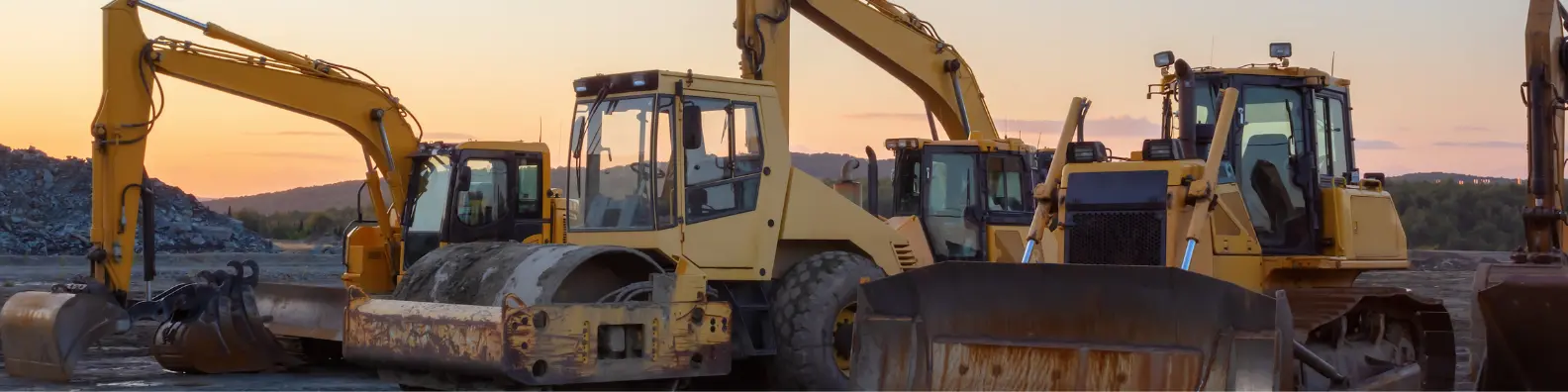
North America's heavy equipment rental market is growing due to higher financing costs and sustained increases in equipment prices. Continued investment across infrastructure, utilities, and industrial projects are prompting businesses to rethink how they deploy capital.
Rather than committing significant investment to owned fleets, many contractors are prioritizing access over ownership, giving them greater flexibility to respond to changing workloads while protecting cash flow. OEMs, dealer groups, and specialist power providers are expanding their rental operations as recurring revenue and long-term customer relationships become increasingly valuable.
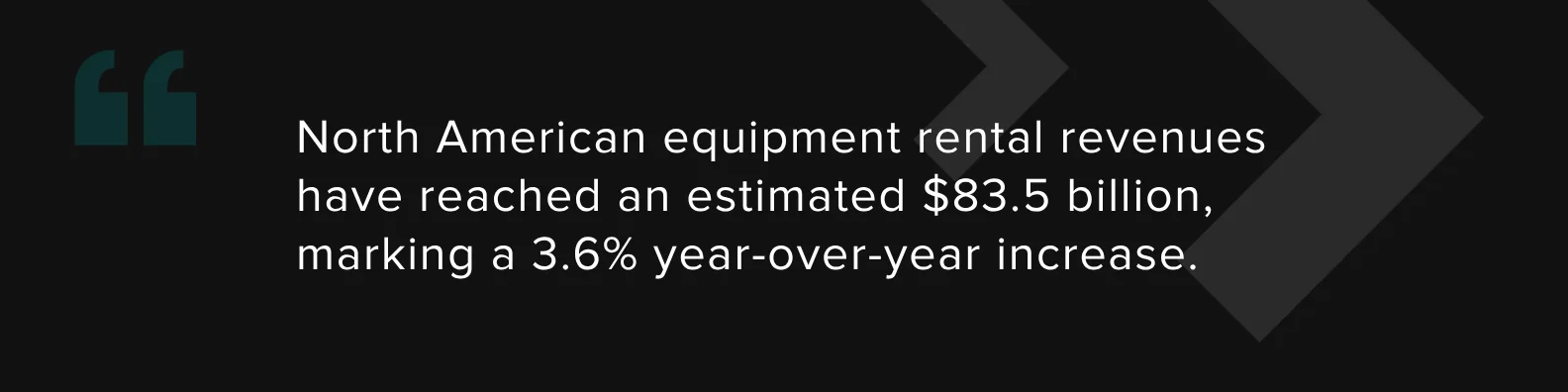
According to the American Rental Association (ARA), North American equipment rental revenues have reached an estimated $83.5 billion, marking a 3.6% year-over-year increase. This growth reflects a major shift in the industry, as rental equipment now accounts for roughly 50% of all machine operating hours. Instead of using rentals as a quick fix for short-term project demands, companies are increasingly adopting equipment rental as a permanent, long-term operating model.
The shift towards usership reflects a change in how contractors assess capital investment. Purchasing heavy equipment has always required significant upfront expenditure, but today's combination of higher borrowing costs and unpredictable project pipelines means many businesses are questioning whether ownership still offers the strongest commercial return. Rental allows equipment costs to rise and fall alongside project demand, saving capital to support business growth, acquisitions, or investment elsewhere.
Within this model, rent-to-rent and rent-to-buy meet different commercial objectives. Rent-to-rent provides flexibility as it enables contractors to expand or reduce fleet capacity without long-term commitments. Rent-to-buy reduces investment risk by allowing organizations to assess utilization before committing to ownership, often through rental purchase options (RPO).
Turner Construction's decision to launch its own equipment company demonstrates how strategic fleet management has become. Major contractors increasingly see fleet availability, utilization, and cost control as competitive advantages that directly influence project delivery and profitability.
The same commercial logic is reshaping dealership strategy. Traditional equipment sales remain an important source of revenue, but they are closely tied to economic cycles and customer confidence. Rental operations generate income throughout an asset's lifecycle, creating more predictable cash flow while strengthening long-term customer relationships through maintenance, servicing, and fleet support.
This explains why leading Caterpillar and John Deere dealer networks continue investing in larger rental fleets despite reduced purchasing activity in some markets. The objective is to build businesses that generate value long after the initial equipment sale. A well-managed fleet continues producing revenue through utilization before eventually entering the used equipment market, extending the commercial life of every asset.
Contact CSG Talent to future-proof your leadership team.
Technology is becoming one of the biggest differentiators in the rental market because stronger margins increasingly depend on how effectively fleets are managed. Connected equipment gives rental providers detailed insight into utilization, fuel consumption, idle time, and machine health, allowing assets to be deployed more efficiently across multiple regions and projects.
Telematics and IoT connectivity have therefore become standard features within modern rental fleets, while machine control technology is helping contractors improve productivity without investing heavily in permanently owned equipment.
Dealers also benefit by using operational data to schedule maintenance around actual machine performance rather than fixed servicing intervals, reducing unnecessary downtime and extending equipment life. The result is a more productive fleet that delivers greater value for both rental providers and customers.
Technological advancement is also pushing customers to expect guaranteed equipment performance, driving the growth of Equipment-as-a-Service (EaaS). Under this model, rental agreements combine equipment, maintenance, remote monitoring, and operational support into a single service offering focused on maximizing uptime.
For dealers, connected fleets make this commercially viable. Real-time performance data allows maintenance teams to identify potential issues before failures occur, reducing disruption while keeping expensive assets in service for longer.
Predictive maintenance supported by IoT telematics can reduce maintenance costs by up to 25%, lower unplanned downtime by up to 50%, and extend equipment lifespan by as much as 40%. Those improvements have a direct impact on fleet utilization and rental margins, showing why digital capability is now a crucial strategic investment.
The next phase of heavy equipment rental growth is extending into mission-critical power solutions. Across North America, the increasing demand for data centers, industrial facilities, and major infrastructure projects is exposing that the availability of reliable power is often the limiting factor in project delivery.
For developers and contractors, the challenge is ensuring assets can become operational once construction is complete. Grid interconnection delays across major US energy markets have now reached 3-7 years, while many mission-critical developments require operational power within 18-36 months.
This is creating significant opportunities for rental providers with the capability to deliver generators, hybrid power systems, and mobile microgrids at scale. Temporary power solutions allow projects to continue progressing while permanent infrastructure is developed, helping customers avoid costly delays and meet project timescales.
Driven by grid congestion, infrastructure investment, and rising demand from power-intensive industries, the global power rental market is valued at approximately $12.4 billion and is forecast to reach $19.1 billion by 2033, growing at a 6.3% CAGR.
As demand increases, rental businesses are expanding their power capabilities. Customers are increasingly looking for complete solutions that combine equipment supply with installation, monitoring, maintenance, and technical support.
Caterpillar's rental ecosystem provides a strong example of this shift through Cat Rental Power, where dedicated power rental divisions support large-scale projects requiring reliable temporary energy solutions. These businesses help customers manage complex power requirements during construction, commissioning, and periods of grid uncertainty. As projects become more complex, businesses that can combine equipment availability with technical expertise will be better positioned to capture long-term customer relationships.
The growth of North America's rental market is accelerating consolidation as operators compete for wider geographic coverage and stronger customer relationships. While organic expansion remains important, acquisitions provide a faster route to increasing equipment availability, entering new regions, and building the infrastructure required to support increasingly complex projects.
One of the clearest examples of this trend is Herc Holdings' acquisition of H&E Equipment Services, one of the largest transactions in the equipment rental sector. The $5.3 billion acquisition expanded Herc's footprint by 35% to 613 locations across North America and created a combined business with approximately $5.1 billion in projected revenue.
However, consolidation is not limited to the leading companies. Regional rental companies are also pursuing acquisitions to strengthen their position in high-growth markets where local expertise and customer proximity are important. Elite Equipment Rentals' expansion into the Mid-Atlantic and Southeast through the acquisition of ISG is an example of this approach as it allows the business to increase its geographic reach while responding to rising demand across key construction and infrastructure markets.
Contractors are now looking for suppliers that understand complex project requirements and can provide equipment solutions tailored to specific operational challenges. This is creating opportunities for rental businesses specializing in niche areas, including custom equipment configurations, temporary power generation, low-emission machinery, and assets designed for highly technical industrial applications.
These sectors often require stronger technical knowledge and service capabilities, creating a barrier to entry for competitors that are focused solely on fleet size. This reinforces the importance for rental operators to develop specialist expertise alongside expanding their equipment portfolio.
The continued expansion of North America's heavy equipment rental market is increasing demand for leaders who understand the complexity of modern rental operations, from fleet optimization and asset management to commercial growth strategies.
At CSG Talent, our Capital Equipment Dealerships specialist recruiters support OEMs, rental businesses, and power generation providers in identifying senior leaders with the industry expertise required to scale operations and capture new market opportunities.
Contact CSG Talent to secure the leadership talent required for the next phase of rental growth.