Drop off your CV
We'd love to hear from you. Send us your CV and one of our specialist consultants will be in touch.


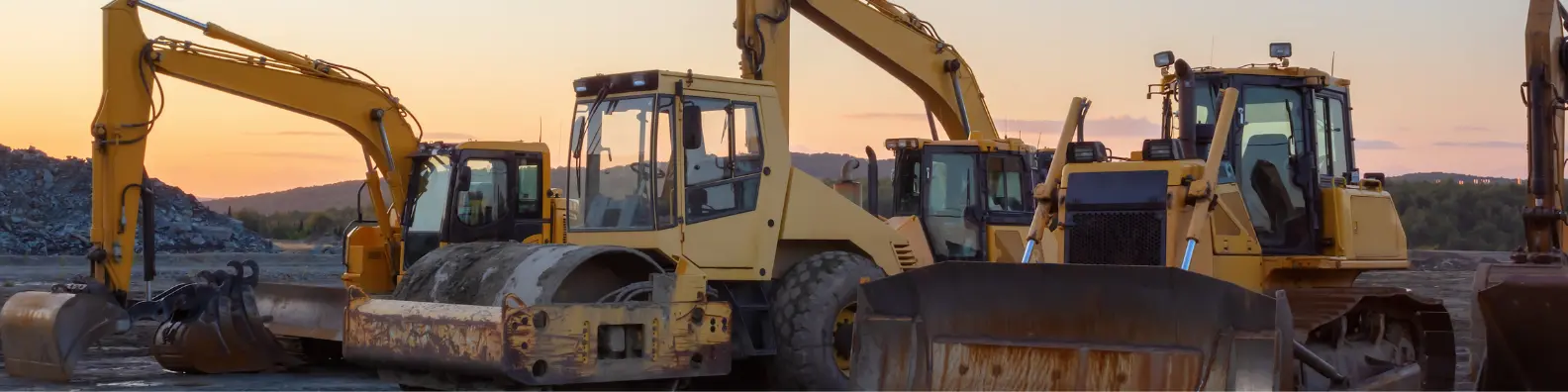
While it’s true that the US construction equipment market is entering a period of change, that doesn’t mean it is slowing down. The US Infrastructure Investment and Jobs Act is in its peak execution phase, meaning the US market is seeing a surge in new projects that offsets the nation’s wider economic volatility. With infrastructure backlogs at record highs and showing no sign of easing, the sector is projected to reach $471.25 billion by 2033, growing at a CAGR of 8.7%.
In this article, we explore the challenges construction equipment OEMs and dealerships are currently facing, why the smartest organisations are treating those challenges as opportunities, and which leadership profiles are in highest demand across the sector.
For in-depth insights into 2026 market trends and salary benchmarking for OEMs, download our recent report.
When interest rates sit somewhere between 7% and 10%, financing a $500,000 excavator becomes a challenge for smaller US contractors, and this has a negative impact on upfront equipment sales. However, as these conditions push customers toward rental and lease-to-buy arrangements, for OEMs and their networks this shift creates an opportunity to build long-term revenue streams.
The OEMs responding most effectively are the ones that have moved away from thinking of themselves purely as equipment sellers and started positioning themselves around guaranteed uptime. When a contractor rents rather than buying, what they are really paying for is the assurance that the machine will be available and operational when they need it. Equipment-as-a-Service (EaaS) models generate recurring revenue through long-term service contracts rather than one-off transactions, and the margins tend to be healthier.
This shift requires leaders who understand how structured financing works, how to present the full lifecycle value of a fleet, and how to design service agreements that work commercially for both parties.
The US construction equipment industry is losing a generation of senior technical and leadership talent to retirement, and their expertise is difficult to replace. The mid-career talent pipeline that should be ready to step into those gaps has not been developed at the scale the sector now needs.
Organisations must treat the retirement wave as a catalyst for a transition they would have to make at some point regardless. Rather than trying to replace like-for-like, many manufacturers are investing in predictive maintenance systems and telematics-driven diagnostics that can identify potential equipment failures before they happen. The leaders capable of implementing these systems are among the most in-demand profiles in the US market right now.
The US construction equipment market is experiencing a split in regulations depending on whereabouts in the country you are operating. At the federal level, recent EPA changes have relaxed emissions compliance requirements and made traditional diesel-powered equipment more commercially viable.
However, California, New York, and Washington are all moving in the opposite direction, with stricter emissions standards and clean construction requirements that mean access to major infrastructure projects in those markets increasingly depends on having a low-emission fleet. This creates complexity for OEMs selling and supporting equipment across the whole of the US, as a product strategy that works in one region can be restrictive in another.
It’s worth noting that the shift toward lower-emission equipment is being driven by more than regulation alone. Fuel costs remain a significant pressure for US contractors, and the total cost of ownership over a machine’s full working life is making electrification an increasingly attractive option.
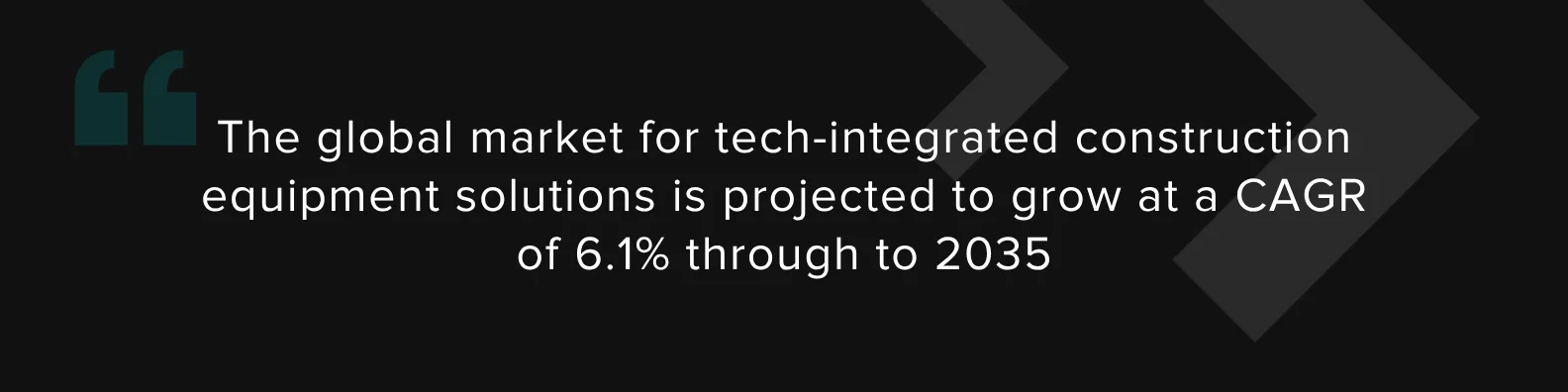
The global market for tech-integrated construction equipment solutions is projected to grow at a CAGR of 6.1% through to 2035, with IoT-enabled fleet management at the centre of that growth. The engineers required to build these machines must be capable of working across both the mechanical and software dimensions of the product, but the demand for these professionals is already outpacing supply.
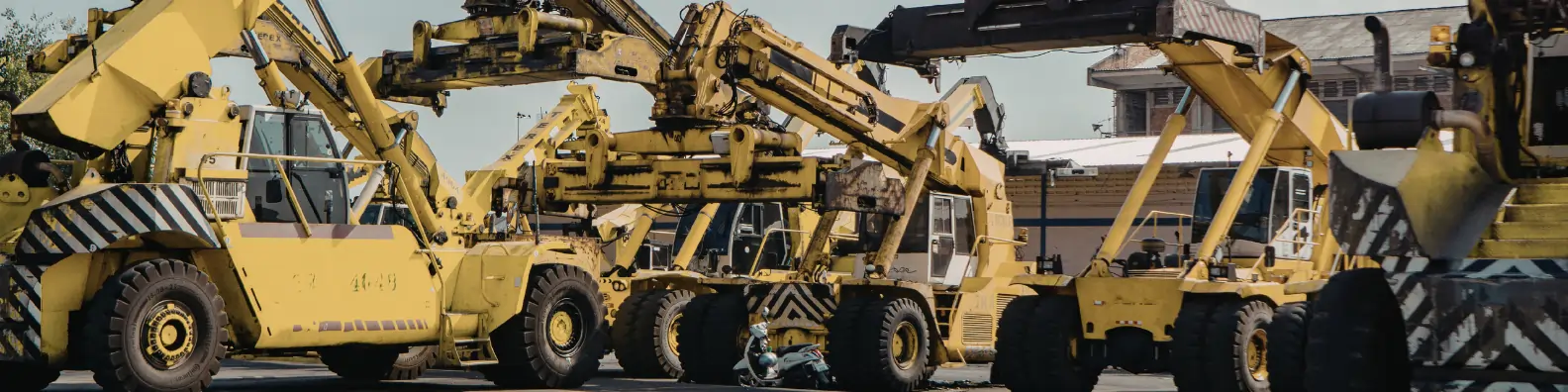
Transitioning a production line from internal combustion engines to high-voltage battery systems or hydrogen fuel cell technology requires a redesign of how equipment is built. Manufacturing leaders who can manage that transition without disrupting the output of existing product lines are one of the hardest profiles to find in the sector right now. The global off-highway electric vehicle market is projected to grow at a CAGR of 16.6% through to 2032, and the pace of that growth means that the demand for strong manufacturing leaders is increasing rapidly.
The combination of US steel and aluminium tariffs introduced in August 2025 and global trade volatility has forced OEMs to reconsider supply chains that were built around a more stable and predictable international trading environment. The major shift is toward regionalisation, with sourcing and manufacturing increasingly moving closer to end markets to reduce exposure to tariff risk and supply chain disruption. Leaders who can redesign procurement and supplier strategies with that goal in mind are in high demand.
Selling a managed service contract is a different commercial conversation from selling a piece of equipment. Rather than leading with specifications and price, the sales leader in a rental or EaaS model needs to clearly articulate the value of uptime, the cost of downtime, and the total return on investment over the life of a contract. To achieve strong conversion rates, organisations must adapt their senior commercial profiles to reflect this shift.
Product support has become a key revenue stream across the sector, and the role has grown well beyond what aftersales management traditionally looked like. Customers are now willing to pay a premium for proactive uptime management, as remote diagnostics can identify and resolve issues before a machine goes down rather than requiring a reactive response.
On the aftermarket side, high equipment costs are keeping older machines in the field for longer, which is driving parts demand and creating commercial opportunity for the leaders building the digital procurement platforms that make ordering those parts faster and easier.
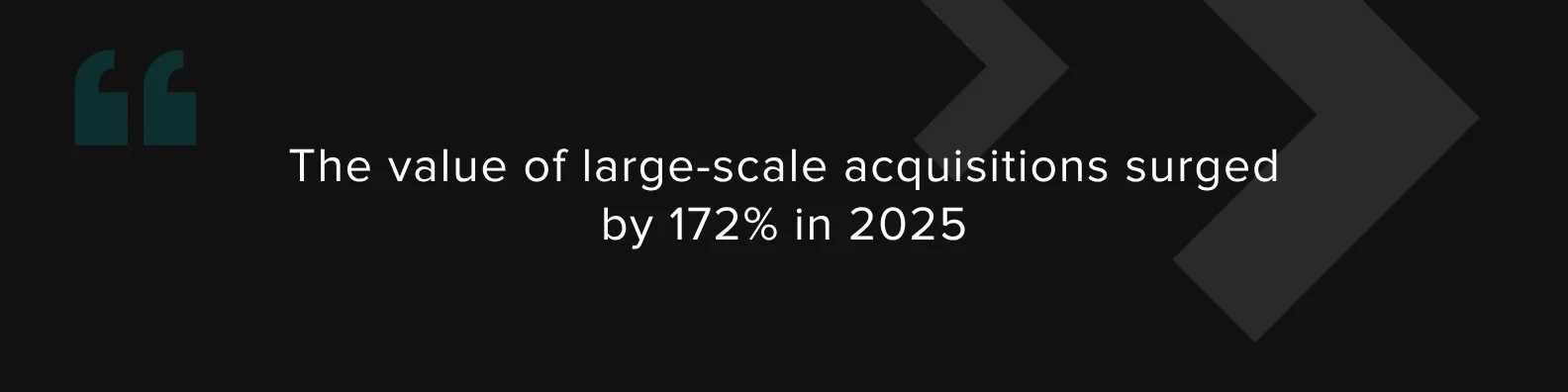
The US dealership and OEM landscape is undergoing a period of major consolidation, as organisations use M&A to offset high production costs. While total deal volume increased by an impressive 18.2% last year, the real story is in the scale, as the value of large-scale acquisitions surged by 172%.
Merging two organisations and standardising how they operate across multiple sites without losing customer relationships and local market expertise requires a specific kind of leadership experience. Integration directors and managers with a track record in this environment are in high demand as a result.
Succeeding in today’s US construction equipment market requires leadership that can navigate complex regulations and evolving commercial models. OEMs and dealerships need executives who understand how to balance rental and service-led strategies, optimise aftermarket performance, and leverage telematics and automation to drive efficiency in an increasingly tech-driven industry.
At CSG Talent, our construction equipment executive search specialists partner with OEMs, dealers, and equity groups to identify and secure senior leaders capable of delivering in this environment. With deep sector expertise and an established network across the US market, we help organisations access the talent required to drive performance and build long-term competitive advantage.
Contact CSG Talent to future-proof your leadership team.