Drop off your CV
We'd love to hear from you. Send us your CV and one of our specialist consultants will be in touch.


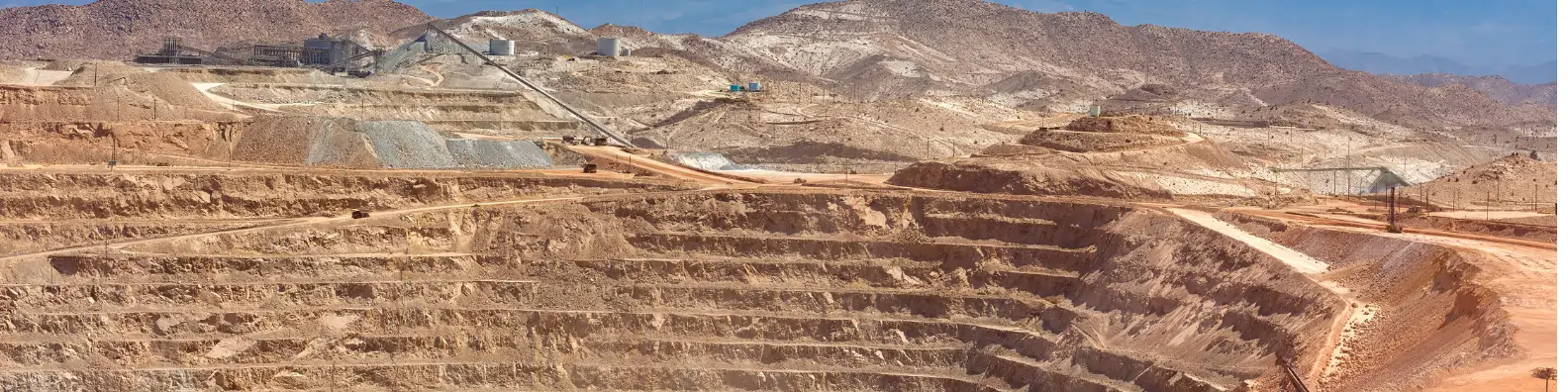
Copper has become one of the world's most important commodities as electrification accelerates, AI infrastructure grows, and governments invest heavily in energy security and defense. Global demand is projected to reach 42 million metric tonnes by 2040, but mine production is expected to peak around 2030, creating a potential supply gap of 10 million tonnes if the industry cannot unlock new sources of production.
In this article, we explore the technologies that are reshaping copper mining and processing, the companies driving innovation, and what this means for the future workforce.
Contact CSG Talent to future-proof your leadership team.
Copper is at the heart of almost every major industrial and technological shift taking place today. It is the wiring that supports renewable energy systems, the backbone of electrical grids, a critical component in battery manufacturing, and the foundation for the global expansion of AI infrastructure.
Electric vehicles alone require up to 100 kilograms of copper per vehicle, roughly 3-4 times more than a traditional internal combustion engine car. On top of that, the rapid expansion of renewable power generation, grid modernization programs, hyperscale data centers, and increased defense investment are creating entirely new sources of copper demand.
The challenge is that copper producers are being asked to deliver more metal from increasingly difficult resources. Many of the world's highest-quality deposits have already been developed, and average ore grades have fallen steadily over recent decades, often dropping below 0.5% copper content. Miners must now move and process significantly more material to recover the same amount of metal, resulting in higher operating costs and environmental impact. This is causing a fundamental shift in the way copper is extracted and processed.
Smelting has historically been the default method for producing copper, but it is becoming increasingly difficult to justify in an era of declining ore grades and tighter emissions regulations. Pyrometallurgy's high energy intensity, combined with its carbon footprint, makes it less competitive than hydrometallurgical approaches, especially for low-grade ores and legacy tailings.
Bioleaching and advanced hydrometallurgy are becoming increasingly common as a result. Biomining processes already account for roughly 20–25% of global copper production, but there is a shift in how controllable these systems are becoming. Advances in microbial engineering and real-time data analytics are transforming what was once a variable and slow process into something much more predictable and scalable. Material that was previously considered waste or uneconomic is now being reprocessed on a large scale, which expands the resource base without the need for new mines.
Crushing and grinding alone account for around 3–4% of global electricity consumption in mining operations, making comminution one of the most energy-intensive stages in copper production. Sensor-based ore sorting is increasingly being adopted to reduce this energy load at the extraction phase.
Operators can now identify and separate waste rock before it enters the mill by combining technologies such as X-ray transmission (XRT) and short-wave infrared (SWIR) imaging with AI-powered classification systems.
This has three major advantages: lower energy consumption, reduced water usage, and higher feed grades entering downstream circuits. Some operations achieve a nearly 1:1 waste split while improving ore grade by up to 182%.
Conventional SAG milling remains widely used, but it is energy-intensive and physically destructive, relying on high-velocity impact and heavy abrasion to shatter rock. High-pressure grinding rolls (HPGR) provide a more controlled alternative.
These systems generate micro-fractures within the rock structure by compressing ore between two counter-rotating rollers, rather than relying on impact. This alters the material’s behavior in downstream processing, particularly in leaching circuits. By preparing ore more effectively at the comminution stage, HPGR technology helps improve overall metal recovery.
Water scarcity is becoming a defining constraint for copper production, with around 52% of copper mines located in regions classified as high water stress. This puts traditional tailings dam infrastructure under increased operational and regulatory pressure.
Conventional tailings storage is based on wet slurry disposal, which traps large amounts of water and introduces long-term structural risk. Dry stack tailings systems solve this problem by filtering and removing up to 85% of the water before disposal, resulting in a more stable, dry material that can be safely stored and gradually rehabilitated.
Electrochemical reductive leaching is one of the more advanced developments in copper processing, especially for complex sulphide ores like chalcopyrite, which are traditionally difficult to treat. Rather than relying on high temperatures or extreme pressure conditions, this process uses electrical energy directly within the leaching environment to change the oxidation state of the ore, allowing for higher recovery rates under milder conditions.
If scalable, this approach has the potential to unlock significant volumes of copper that are currently considered uneconomic under standard processing routes, effectively increasing global supply without the need for new discoveries.
Still Bright's RACER technology is based on electrochemical reductive leaching, which uses a vanadium-based solution to extract up to 99% copper from complex, low-grade ores in minutes. This process significantly reduces the environmental footprint by avoiding energy-intensive comminution and smelting. The approach integrates a vanadium recycling system inspired by flow battery design, creating a circular link between energy storage technology and copper extraction.
Mariana Minerals represents a different but equally significant shift, where artificial intelligence is being integrated directly into operational decision-making. Through its Copper One initiative powered by MarianaOS, the company uses AI-driven geological modelling to better understand ore body complexity, as well as real-time optimization tools to adjust processing parameters as new data is generated. Sensor-based inputs are increasingly feeding directly into these systems, reducing the time between observation and operational response.
Talent is one of the biggest constraints on future copper supply, with 71% of CEOs saying shortages are already slowing production and delaying project delivery. Some operations are running up to 2 years behind schedule, with workforce availability cited as the main challenge rather than resource access or capital. The workforce is also aging rapidly, with the average miner in the United States now 46 years old and more than 221,000 skilled workers set to retire by 2029.
Data scientists, AI engineers, automation specialists, process optimization experts, and environmental professionals are all becoming increasingly important in modern operations. Copper mines are transitioning to hybrid industrial-digital systems, but many employers continue to make the mistake of positioning themselves as traditional resource businesses when competing for talent with technology and clean energy companies.
This matters because candidate expectations have changed. A study found that around 90% of STEM students said they would consider a career in mining once its role in enabling electrification and decarbonization was clearly explained. Businesses must articulate how their day-to-day technical roles contribute to global energy transition outcomes.
Candidates are also increasingly resistant to rigid FIFO rotations, with more flexible rosters and improved on-site infrastructure increasingly preferred over salary increases. The most successful companies link technical careers to real-world impact while providing working models that reflect modern workforce expectations.
The technologies transforming copper mining are reshaping the skills required to build and operate modern assets, from automation and digital mining through to advanced processing, metallurgy, and sustainability leadership. As the industry races to expand supply, securing this specialist talent is becoming a critical competitive advantage.
At CSG Talent, we partner with global mining and battery metals organizations to identify and attract the talent required to deliver the next generation of copper production.
Contact CSG Talent to connect with specialist copper mining and battery metals professionals who can help drive your next project forward.
Articles:
Podcasts:
Case Studies:
What technologies are transforming copper mining?
Key technologies include bioleaching, sensor-based ore sorting, high-pressure grinding rolls (HPGR), dry stack tailings, and electrochemical reductive leaching, all of which improve efficiency and recovery rates.
Why is copper demand increasing?
Copper demand is rising due to electrification, renewable energy expansion, electric vehicles, grid modernization, AI data centers, and growing defense infrastructure investment.
Why are copper miners adopting new processing technologies?
Declining ore grades and growing environmental pressures mean miners must recover more copper from lower-quality resources while reducing energy, water use, and emissions.
What skills are most in demand in modern copper mining?
Mining companies are increasingly hiring data scientists, AI engineers, automation specialists, metallurgists, process optimization experts, and environmental professionals.
How does copper support the energy transition?
Copper is essential for electric vehicles, battery manufacturing, renewable energy systems, transmission infrastructure, and electrical grids, making it a critical material for global decarbonization.