Drop off your CV
We'd love to hear from you. Send us your CV and one of our specialist consultants will be in touch.


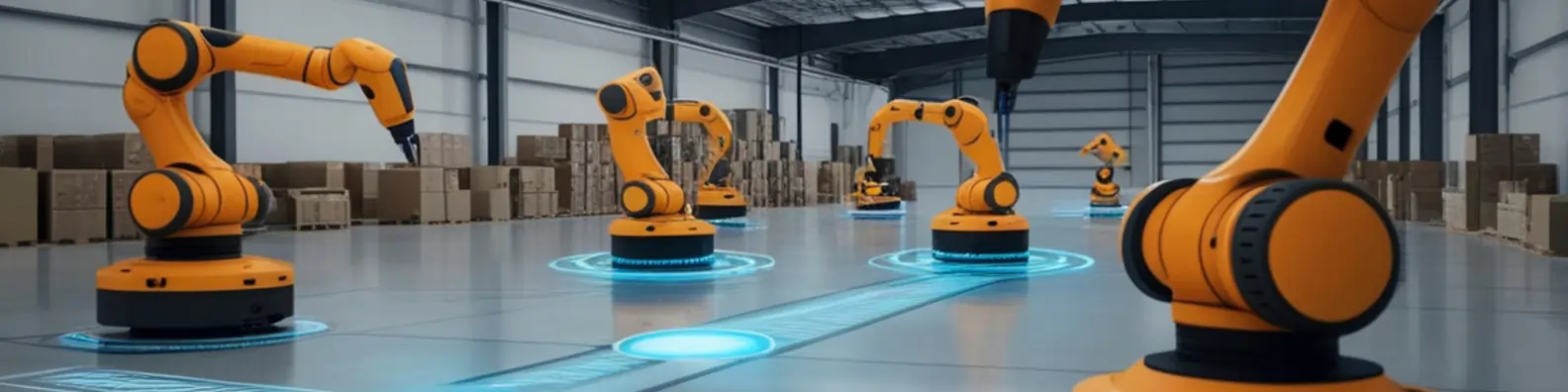
As the global automation industry evolves in 2026, rising energy costs, service-led automation models, and AI-driven systems are all influencing the types of skills businesses need to innovate and grow. This is increasing demand for professionals who can combine technological advancement with operational and commercial success.
In this article, we explore the key automation roles in demand for 2026, alongside the skills and responsibilities shaping each position.
In our recent article, we also discussed the key automation trends shaping manufacturing in 2026.
Contact CSG Talent to secure senior-level automation talent.
Controls Engineers remain one of the most critical hires across industrial, warehouse, and process automation. Around 40% of manufacturers are expected to upgrade to AI-driven production scheduling by 2026, placing greater demand on Controls Engineers who can integrate PLCs, SCADA, and MES environments with advanced analytics and AI-driven tools.
This shift is reflected in the fact that 77% of manufacturing leaders reported increased software and automation budgets entering 2026, highlighting the growing importance of controls expertise that supports both physical systems and digital decision-making. Modern Controls Engineers are increasingly valued for their ability to support predictive maintenance, improve system uptime, and optimise energy usage across complex production environments.

Demand for Robotics Engineers continues to grow as robotics becomes more deeply embedded into production, warehousing, and logistics environments. These professionals are expected to work closely with operations teams to ensure robots integrate seamlessly with wider automation ecosystems. Skills in collaborative robotics and adaptive automation are increasingly important as humans and robots work more collaboratively.
Implementation Engineers are playing a more prominent role in automation projects as they face greater scrutiny around cost, disruption, and return on investment. These professionals are responsible for deploying automation solutions into live environments with minimal operational impact.
Strong Implementation Engineers combine technical expertise with communication and project coordination skills, ensuring systems are configured correctly, tested thoroughly, and can be adopted easily by end users. Their role is particularly important as manufacturers place greater emphasis on usability and long-term system performance.
The growing complexity of automated environments has driven strong demand for IoT and Systems Integration Specialists who can connect physical automation with business-wide digital platforms.
With 80% of manufacturing executives planning to invest 20% or more of their budgets into smart manufacturing initiatives, these roles have become central to automation strategies. IoT and integration specialists enable real-time data sharing between robotics, controls, ERP, MES, and energy management systems, meaning organisations gain significant value from increased digital investment.
Automation Project Managers are in high demand as organisations scale smart manufacturing initiatives across multiple sites and production lines. As capital allocation shifts toward software-enabled automation and connected infrastructure, Project Managers are responsible for ensuring increased investment translates into operational improvements.
Strong project leadership is essential to manage timelines, suppliers, and teams while keeping disruption and risk to a minimum. Employers increasingly value Project Managers who understand both the technical and commercial side of automation and can align delivery with long-term business objectives.
As reliability and responsiveness become key performance metrics, Service Engineers and Automation Technicians remain essential across all automation environments. Employers value technicians with preventative maintenance experience and the ability to support increasingly software-driven systems. Familiarity with robotics and sensors is particularly important as maintenance strategies move from reactive to predictive models.
Automation providers and integrators are increasingly investing in Account Managers and Customer Success professionals, as these roles focus on ensuring automation systems continue to deliver value long after installation. Responsibilities often include performance optimisation, system upgrades, and identifying opportunities for additional services or expansion. This reflects a broader shift toward service-led automation relationships, where long-term customer retention is just as important as initial project delivery.
Automation investment is driving demand for leaders who can turn increased technology spend into a competitive advantage. Heads of Engineering and Heads of Operations are under growing pressure to ensure automation initiatives deliver measurable return on investment. The most effective leaders combine deep technical understanding with the ability to manage risk, prioritise investment, and align automation strategies with wider organisational goals.
As IT and OT environments continue to merge, cybersecurity has become one of the most critical and fast-growing areas of automation hiring. Manufacturing facilities are now prime targets for ransomware and operational disruption, particularly as more systems become interconnected.
In 2026, the global cybersecurity workforce shortage is projected to reach approximately 4.8 million unfilled roles, with a significant spike in demand for professionals specialising in industrial and OT security. Industrial Cybersecurity Architects are responsible for securing automation environments without disrupting real-time production. This includes protecting PLCs, robotics, sensors, and edge devices while ensuring compliance with regulations.
As automation and AI systems become more autonomous, roles focused solely on governance are increasing rapidly. Many large organisations are now appointing Heads of AI Governance to manage legal and operational risk. These professionals work across compliance, technology, and leadership teams to ensure automated systems align with regulatory requirements and internal standards, making experience in policy development and risk management increasingly sought after.
Across all automation roles, employers are placing greater emphasis on adaptability, cross-functional collaboration, and long-term system ownership. For both manufacturers and automation providers, accessing this talent requires a deep understanding of evolving skill requirements and sector-specific challenges.
At CSG Talent, we work closely with organisations across industrial automation and robotics to identify and secure high-impact automation professionals. Our specialist automation consultants combine market expertise with a global talent network to support businesses as they build teams capable of delivering scalable, future-ready automation strategies.
Whether you’re hiring technical specialists, commercial leaders, or governance-focused roles, we provide a consultative approach to help your organisation achieve long-term success.
Contact CSG Talent to discuss your automation hiring strategy for 2026 and beyond.