Drop off your CV
We'd love to hear from you. Send us your CV and one of our specialist consultants will be in touch.


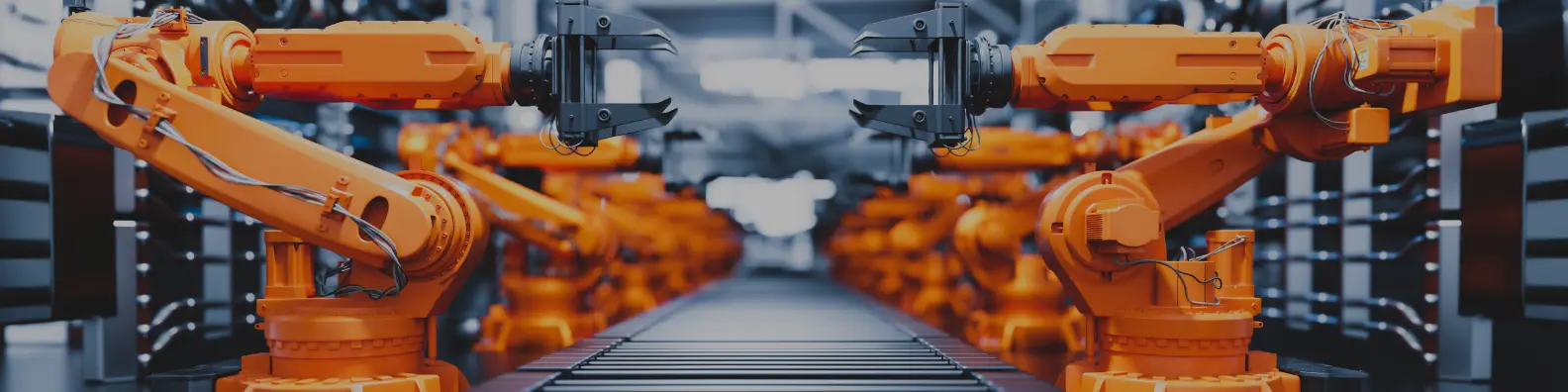
APAC is becoming a major market for global automation investment, with businesses accelerating technology adoption to manage rising operating costs, talent challenges, and pressure on productivity. Across manufacturing and logistics, organisations are embedding automation more widely into their operations.
China is driving much of the momentum in manufacturing and robotics, while other markets are developing their own strengths in autonomous operations and digital infrastructure. As automation becomes more advanced, demand is growing for people who understand both the technology and the environments in which it needs to operate.
In this article, we examine the key developments shaping APAC's automation market in 2027, from advances in technology to the commercial challenges influencing adoption in Australia.
Manufacturers across APAC are investing in automation to improve production efficiency and manage operating costs. While new manufacturing capacity is creating opportunities for greenfield projects, many organisations are also modernising established sites by integrating digital technologies into existing infrastructure.
Programmable Logic Controllers (PLCs), Supervisory Control and Data Acquisition (SCADA) systems, and industrial IoT (IIoT) are becoming more closely connected, giving businesses greater visibility of production processes and equipment performance. Digital twins also help manufacturers simulate operations and find inefficiencies before committing to physical changes.
Integrating these technologies with legacy infrastructure remains a challenge. New systems need to communicate with existing equipment and software, making integration planning essential for businesses looking to improve operations without replacing entire systems.
China's warehouse automation market is expanding rapidly as e-commerce demand and faster delivery expectations push logistics operators towards high-throughput systems that maximise warehouse space.
The Chinese warehouse automation market is valued at approximately $4.7 billion and growing at an estimated CAGR of 13.5%. Major logistics hubs such as Shanghai and Shenzhen are seeing greater adoption of Autonomous Mobile Robots (AMRs), Automated Guided Vehicles (AGVs), and Automated Storage and Retrieval Systems (AS/RS). Warehouse Execution Systems (WES) also help operators coordinate automated equipment and manage complex fulfilment operations.
Rather than committing to a large-scale warehouse overhaul that takes years to implement, operators are showing greater interest in modular systems that can be introduced gradually and expanded as demand grows. This allows businesses to increase capacity while managing capital expenditure more carefully.
China's established component manufacturing base, including actuators, sensors, and harmonic reducers, supports the development of increasingly complex robotic systems. One area attracting attention is embodied AI, which combines artificial intelligence with physical robotics.
Traditional industrial robots were designed for fixed, repetitive tasks in controlled environments. Newer systems are becoming more adaptable, allowing robots to navigate unpredictable spaces and respond to changing conditions in real time.
Humanoid robots are one example, with developers looking to create systems capable of performing a wider range of tasks in environments originally designed for people. However, commercial adoption will depend on their reliability and potential to deliver a clear return on investment compared to established automation solutions.
Generative AI tools have changed how businesses access and process information, but attention is now moving towards agentic workflows. These involve AI agents capable of completing multi-step tasks across business systems with less need for continuous human input. Common uses include working across CRM and ERP platforms to process information, manage workflows, and support customer interactions.
Automation is also changing financial markets, including corporate bond trading. Historically, buying and selling bonds has been a slow, manual process because information is scattered across different sources rather than listed on one central exchange. Today, quantitative finance teams are using machine learning and automated trading systems to analyse market information and identify trading opportunities more effectively.
Australia has significant experience in large-scale industrial automation, particularly across mining and resources. Operations in the Pilbara have helped establish the country as a leader in autonomous haulage, automated rail networks, and remote operations centres, with mining companies using these systems to manage complex operations across vast geographical areas.
That experience is now creating opportunities beyond the resources sector. Civil construction, port operations, heavy logistics, and advanced manufacturing are exploring how established autonomous technologies can improve productivity and reduce reliance on manual processes.
As businesses adopt more advanced AI and automated workflows, governance is becoming a greater consideration. Australian organisations are paying closer attention to how these technologies handle sensitive information and interact with existing business systems.
Data privacy and cybersecurity are particularly relevant as AI is now used in processes involving customer information and financial decisions. Businesses need clear accountability for automated systems, including where human oversight is required and how decisions can be monitored.
Establishing safeguards will be essential to maintaining confidence in these technologies and ensuring their usage aligns with regulatory and commercial requirements.
Despite the opportunities, Australian businesses face economic pressures that can make large-scale technology investment difficult to justify. Inflation, fluctuating commodity prices, and cautious capital markets are making organisations scrutinise spending more closely.
As a result, some businesses are breaking larger digital transformation programmes into smaller projects with clearly defined productivity targets. This allows them to demonstrate returns before committing to further investment while also reducing the financial risk of complex implementations.

As automation becomes more sophisticated, finding people with the right experience will be a major challenge for businesses across APAC. Many of the capabilities required are relatively new, and traditional recruitment approaches often struggle to identify candidates whose experience spans different technologies or industries.
Professionals with experience in robotics, industrial controls, OT/IT integration, and AI implementation are in demand, while organisations developing agentic workflows need people who understand both technical systems and their commercial applications. Automation programmes also require coordination between engineering, IT, operations, and senior management, so businesses need leaders who can turn technology into operational improvements and support change across the organisation.
Looking beyond direct industry experience and adopting a skills-first hiring strategy can open up a wider talent pool. Professionals who have delivered automation projects in mining, manufacturing, or logistics may have relevant experience for businesses in other sectors facing similar technical challenges. Assessing candidates on the complexity of the systems they have worked with, rather than relying solely on their previous industry, can help employers identify people with the right capabilities.
CSG Talent supports businesses across APAC with specialist automation recruitment and executive search, helping organisations secure the technical and leadership expertise needed to deliver their automation strategies. Through a consultative search approach, CSG Talent helps clients define their hiring requirements, access specialist talent markets, and identify professionals with the experience to make a meaningful contribution to their business.
Contact CSG Talent to secure senior-level automation talent.