Drop off your CV
We'd love to hear from you. Send us your CV and one of our specialist consultants will be in touch.



Businesses operating across aerospace, aviation, defense, space, UAS/UAV, eVTOL, and robotics are working in a market where demand for new capabilities is increasing. However, turning technological progress into products and systems that can be delivered at scale is putting additional pressure on engineering teams.
In this article, we explore five key talent challenges facing businesses across the aerospace, defense, and next-generation technology sectors.
Are you experiencing any of these or other challenges right now? We’d love to hear from you – contact us to share your insights for our upcoming thought leadership content.
The development of advanced aerospace and defense technologies requires specialist engineering expertise that can be difficult to secure. Businesses need people with experience in areas such as systems engineering, embedded software, avionics, and autonomous systems, alongside an understanding of the technical standards and regulatory requirements involved in developing complex products.
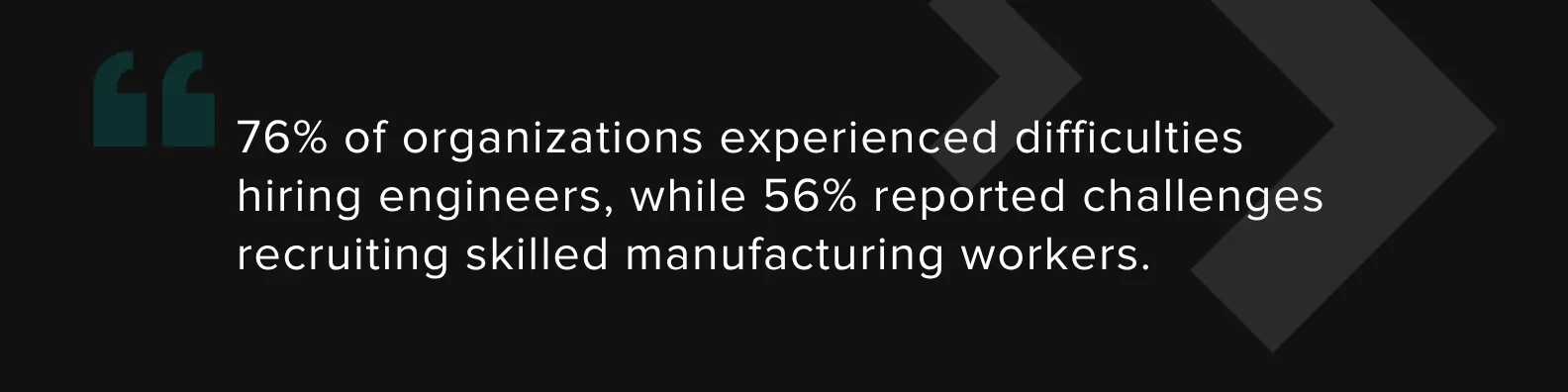
The scale of the challenge is reflected in the Aerospace Industries Association and McKinsey workforce study. It found that 76% of surveyed member organizations experienced difficulties hiring engineers, while 56% reported challenges recruiting skilled manufacturing workers. The industry's attrition rate also remained close to 15%, adding to the pressure on businesses to retain experienced employees while bringing in new expertise.
Businesses developing emerging technologies often need candidates who have already worked on similar systems and understand the challenges involved in taking them through development, testing, and integration. This experience can be difficult to find, particularly in newer areas where not many professionals have worked on technologies at a commercial scale.
Competition for engineering professionals is growing as established aerospace and defense manufacturers invest in new capabilities and businesses in commercial space, autonomous systems, and advanced air mobility expand their teams. Startups are also building engineering functions to develop new platforms and bring emerging technologies to market.
These organizations offer very different career opportunities. Startups may appeal to engineers who want greater involvement in product development and the opportunity to influence a technology at an early stage, while larger organizations can offer the chance to work on major programs with more established engineering structures and long-term project commitments.
There is even competition beyond the aerospace and defense sector, as robotics companies, software businesses, and other advanced technology manufacturers are looking for people with overlapping technical skills. Someone who has developed autonomous systems for a robotics company, for example, may have highly relevant capabilities for an aerospace or defense program. Companies trying to build strong teams must be clear about the responsibilities, development opportunities, and long-term direction they can offer candidates.
For businesses working on US defense programs or handling sensitive technical information, export-control regulations and security clearance requirements can make recruitment more complex.
The International Traffic in Arms Regulations (ITAR) govern the export and access controls surrounding certain defense-related goods, software, and data. Roles involving controlled information may require employees to meet specific eligibility conditions or require the business to obtain the relevant government authorization.
It’s important to distinguish between export-control requirements and security clearance eligibility. Under US export-control rules, the definition of a US person includes US citizens and nationals but also lawful permanent residents and certain protected individuals. The US Department of Justice specifically clarifies that ITAR does not impose a blanket requirement for employers to recruit only US citizens.
Security clearances have different restrictions. The US Defense Counterintelligence and Security Agency states that non-US citizens are not eligible for standard personnel security clearances, although limited access authorizations may be available in certain circumstances.
These differences affect which candidates are available for individual positions. A highly qualified engineer may have the relevant technical experience and permission to work in the US but still be unable to access information required for a particular program. Businesses need to establish whether a role requires access to export-controlled technical information or classified material before beginning a search. This is particularly important when recruiting internationally, as the eligibility requirements can significantly narrow the available candidate pool.
Experience in design or research and development is valuable, but companies progressing towards certification, manufacturing, and commercial deployment also need people who understand how decisions made at one stage affect the rest of the product lifecycle.
For example, an engineer may have strong experience developing an individual component but limited exposure to system integration or testing. Another candidate may have worked in manufacturing without having been involved in early-stage design decisions. Businesses developing complex platforms need people who understand how these stages connect and identify potential problems before they affect delivery.
This creates pressure when recruiting at mid-level as employers expect these candidates to bring hands-on technical ability alongside enough program experience to take ownership of work and collaborate with other engineering functions. Professionals with this combination of experience are often already well established in their careers and highly valued by their current employers, making them difficult to attract.
Growing an engineering team quickly does not automatically increase a company's ability to deliver. New employees need time to understand the product and development, while existing teams must have the capacity to support them. Aerospace and defense projects have strict requirements around safety, testing, and regulatory compliance, meaning fast recruitment cannot come at the expense of engineering quality.
The timing of recruitment can be just as important as the number of people hired. Bringing specialist engineers into a program too late can leave businesses addressing technical challenges after important decisions have already been made. Identifying skills gaps earlier allows companies to build the right expertise into development plans and reduces the risk of recruitment causing delays when programs reach critical stages.
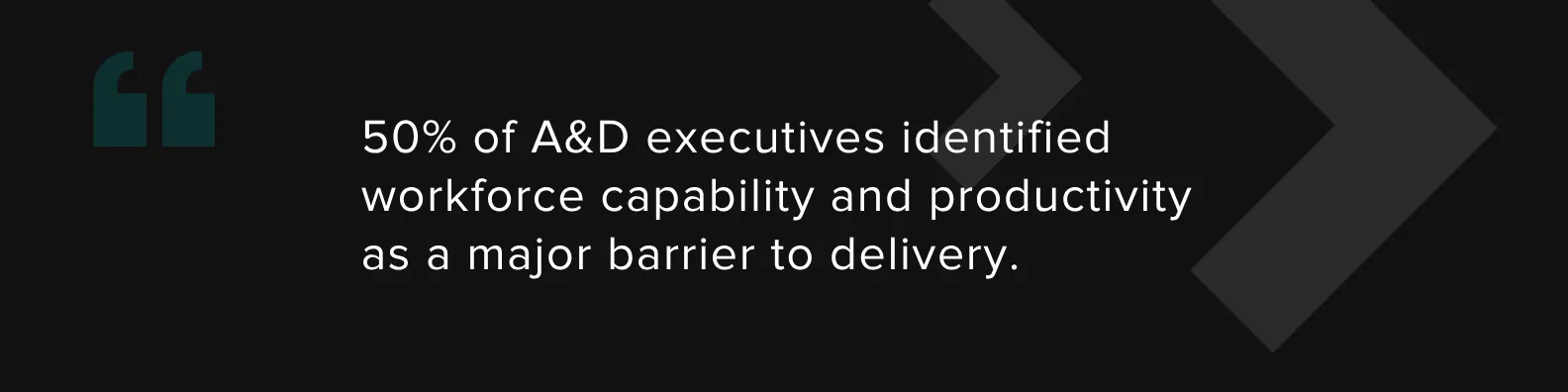
PwC's 2026 global outlook found that around 50% of surveyed A&D executives identified workforce capability and productivity as a major barrier to delivery. However, only 20% considered it a top-three strategic priority for the next five years. This suggests that workforce planning needs to be more closely connected to business growth and program requirements.
As aerospace, defense, and next-gen technology businesses move towards more complex programs, access to specialist engineers and experienced leadership will directly influence their ability to deliver. Companies need to understand the skills required at each stage of development and build teams that can support their long-term objectives. As program demands shift rapidly, hiring contract and interim professionals is also becoming critical to increase agility in engineering functions without long-term delays.
CSG Talent works with businesses across aerospace, defense, space, and next-generation technology to identify and secure specialist professionals and senior leaders. Whether scaling permanent teams or sourcing contract and interim expertise, our next-gen technology recruitment specialists help organizations access the expertise needed to strengthen engineering functions and support the delivery of complex programs.
Contact CSG Talent to discuss your next-generation technology executive search requirements.