Drop off your CV
We'd love to hear from you. Send us your CV and one of our specialist consultants will be in touch.


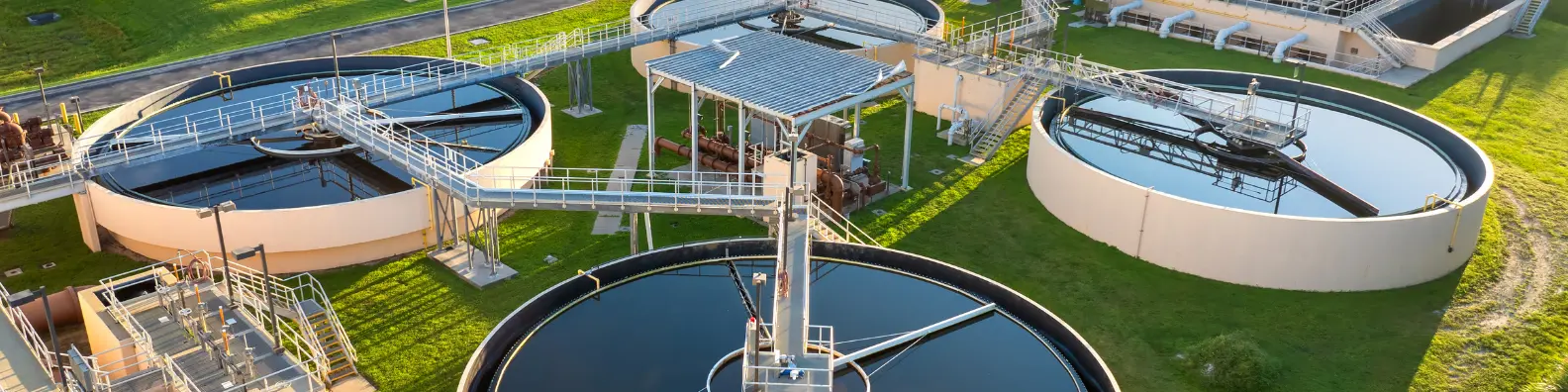
The US wastewater market enters the second half of 2026 with demand rising and the sector’s ability to deliver being tested. Aging infrastructure, tighter environmental requirements, and growing demand for water are creating work across the market, but the capacity to turn that investment into completed projects is becoming a greater concern. Funding uncertainty is making capital planning harder, while a shortage of experienced engineers and technical professionals is increasing workloads for those already in the sector.
This is shaping where investment is going and the capabilities businesses need to execute it. Retrofitting existing facilities can offer a more practical route to increasing capacity and integrating new technology, while water reuse is creating opportunities beyond established markets such as California and Arizona. At the same time, private equity is accelerating consolidation across engineering and environmental services, creating new requirements around leadership, integration, and talent retention.
In this article, we explore the key trends shaping the US wastewater market in 2026 and the talent challenges affecting project delivery.
The US wastewater sector is facing a more uncertain funding environment while infrastructure requirements continue to grow. Federal programs have provided support for wastewater and water infrastructure, but the prospect of cutbacks or reallocations is making it harder for municipalities and project owners to plan investment with confidence. Even projects that have already secured grant support are facing greater uncertainty around timing and delivery.
The Infrastructure Investment and Jobs Act allocated more than $50 billion to drinking water, wastewater, water reuse, conveyance, and water storage infrastructure, including $11.7 billion for the Clean Water State Revolving Fund and $1 billion within that fund for emerging contaminants.
The challenge is that even if public funding pipelines become less predictable, municipalities still need to address compliance mandates and aging infrastructure. That creates a more difficult capital planning environment, particularly for smaller utilities with limited resources.
PFAS is adding further capital pressure because compliance often requires changes to treatment processes, monitoring systems, and existing facilities. The estimated annual cost of meeting new standards is around $1.55 billion, increasing the investment required from utilities already dealing with aging infrastructure and constrained budgets.
For wastewater businesses, PFAS is influencing infrastructure decisions alongside wider capacity and asset-management requirements. Utilities need to determine where treatment upgrades will have the greatest impact and how those changes can be delivered without creating unnecessary cost or disruption. This strengthens the case for engineering expertise that can assess existing assets, identify practical treatment solutions, and manage projects through to delivery.
Private equity is continuing to reshape the US architecture, engineering, and environmental services market, with acquisitions providing a route to expand geographic coverage and bring specialist practices into larger platforms to accelerate growth.
The main challenge comes after the transition. Integrating smaller practices can create gaps in leadership and specialist expertise, while senior professionals may hold relationships and technical knowledge that are difficult to replace. Retention therefore becomes a key consideration as acquired teams need to be integrated without disrupting client delivery.
Leadership teams therefore need to understand the capabilities already within an acquired business before deciding where new appointments are needed. Succession planning, retention, and senior-level hiring should be part of the integration strategy rather than being addressed once the deal is complete.
The scale of America's infrastructure requirements does not mean every solution will involve building new treatment facilities. With aging assets and tight budgets influencing investment decisions, brownfield upgrades and facility refurbishment are becoming a more practical way to increase capacity and improve existing systems.
Upgrading an established site can avoid some of the cost and timescale associated with a new facility while creating an opportunity to integrate newer treatment technologies or respond to changing regulations. That makes retrofit particularly useful where capacity needs to increase but the existing site can support further investment.
The American Society of Civil Engineers' 2025 infrastructure report gave US wastewater infrastructure a D+ grade and identified a substantial investment requirement. Retrofitting cannot address every infrastructure constraint, but where existing assets can be upgraded, it can provide a more targeted route to improving performance without taking an entirely new project through planning, design, financing, and construction.
Working within an operating facility presents a different delivery challenge from building a standalone site, as engineers need to understand existing processes, coordinate multiple technical functions, and manage upgrades around live operations without impacting ongoing performance.
That creates demand for specialists across process engineering, automation, advanced treatment, asset management, and project delivery. The ability to assess an existing asset and identify where investment will have the greatest impact is particularly valuable. Clients need people who can understand the limitations of an established facility and translate that knowledge into practical design and delivery decisions.
Water reuse is becoming a more important part of US water infrastructure as drought risk, industrial expansion, and pressure on existing supplies increase. Historically associated most strongly with water-stressed states such as California and Arizona, reuse is now becoming relevant in regions where industrial and community water requirements are placing greater pressure on available resources.
EPA's Water Reuse Action Plan 2.0 links reuse with industrial growth, AI, energy production, and water resource resilience, while federal programs provide potential funding routes for reuse infrastructure. This is particularly significant for industries with substantial water requirements such as data centers and advanced manufacturing.
Texas and Florida remain important markets, but interest is also developing across the Mid-Atlantic and Midwest as businesses and communities consider water availability alongside wider infrastructure and development plans. The Department of Energy's National Alliance for Water Innovation has been funding work focused on onsite reuse technologies for industrial cooling, process and rinse water, and wastewater treatment effluent.
Scaling reuse requires expertise across treatment technology, water resources, process engineering, monitoring, and infrastructure delivery. It also creates a need for leaders who can work across separate parts of the water sector and understand how technical decisions connect with commercial and operational requirements.
Digital water technologies are becoming increasingly relevant as utilities and industrial operators look for better ways to monitor assets and manage maintenance. AI-enabled predictive maintenance, real-time sensor analytics, and automated monitoring can help identify equipment issues earlier and improve visibility across treatment processes.
To extract maximum value from AI, operators need reliable data and talent that understands both new technologies and the water processes. As digital tools become more closely integrated with operational systems such as SCADA, cybersecurity and data management become increasingly vital.
Water-as-a-Service (WaaS) is creating another model for municipalities and industrial users that need infrastructure investment but have limited internal resources. Under these arrangements, specialist providers take responsibility for elements of technology deployment, infrastructure investment, or service delivery to reduce the capabilities that the end user needs to build internally.
The shortage of qualified engineering and technical professionals is becoming a delivery constraint for wastewater businesses across the US. The water sector is expected to lose 30-50% of its workforce to retirement over the next decade, increasing pressure on an already limited pool of experienced professionals.
Engineers are carrying heavier workloads, which can contribute to burnout and people leaving the industry, further reducing the expertise available to deliver the next wave of projects.
This creates a difficult cycle for employers, as investment creates demand for more delivery capability, but the people required to execute that investment are becoming harder to find and retain. Businesses therefore need to increase their focus on retention, succession planning, and securing the specialist professionals required to support growth.
CSG Talent supports businesses across the wastewater and environmental market with specialist executive search, using in-depth market expertise to identify the talent required for key hires through periods of growth or change.
Contact CSG Talent for a specialized executive recruitment strategy tailored to the US Wastewater and Environmental sector.
PFAS compliance, aging infrastructure, facility retrofits, water reuse, digital water, AI, private equity investment, and talent shortages are shaping the market.
Retrofitting can increase capacity, improve existing facilities, and integrate new technology without the cost and timescale of building entirely new infrastructure.
Yes. Water reuse is gaining traction beyond California and Arizona as drought risk, industrial growth, and pressure on water supplies increase.
AI is being applied to predictive maintenance and treatment processes, helping operators identify issues earlier and make better-informed operational decisions.
Yes. Retirement and the limited availability of experienced technical professionals are tightening the talent pool and contributing to burnout and people leaving the industry.