Drop off your CV
We'd love to hear from you. Send us your CV and one of our specialist consultants will be in touch.



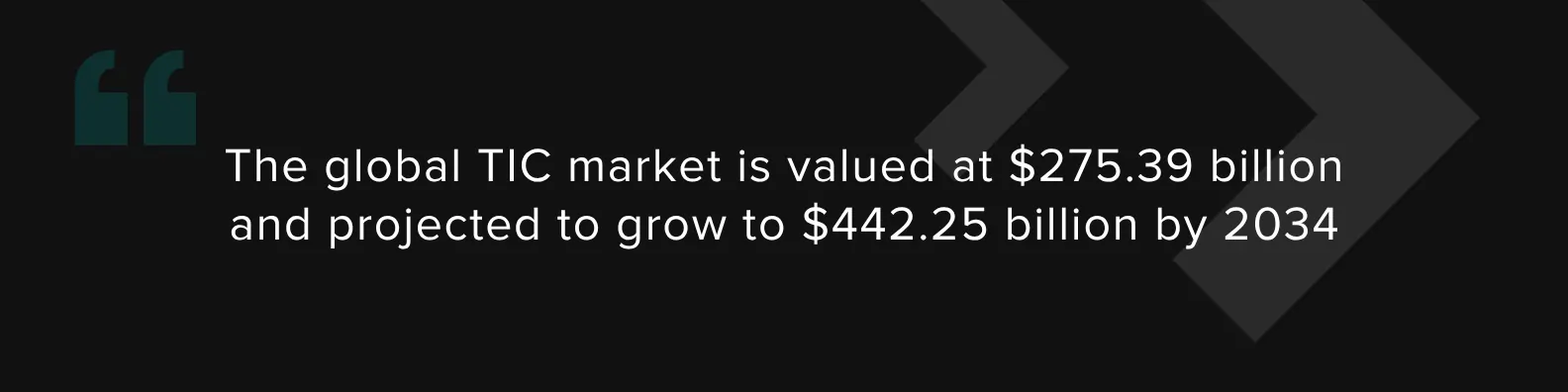
The Testing, Inspection, and Certification (TIC) market in 2026 is undergoing a major shift as global industries transition from routine safety checks to strategic risk management. Increased demand for digital infrastructure, AI governance, and cybersecurity certification is forcing a move toward more data-driven validation models. With the global TIC market valued at $275.39 billion and projected to grow to $442.25 billion by 2034 at a CAGR of 6.1%, the competition for talent is intensifying.
In this article, we explore the key trends transforming the TIC market in 2026 and the most in-demand technical and executive TIC roles shaping the future of the industry.
Contact CSG Talent to secure senior-level talent.
TIC is moving toward a model known as TIC 4.0, where simulations are used to test products before physical prototypes are built. This helps businesses identify issues earlier and reduce time-to-market without compromising on quality. The industry is also adopting a human-verified automation approach, where AI and sensors collect data, but accredited professionals remain responsible for validation and sign-off.
Quality testing accounts for around 42% of all activity, but it is now supported by automation and data-driven processes. This is impacting TIC jobs as employers require professionals who can work across both physical testing environments and digital systems.
Sustainability reporting is now a key compliance requirement as businesses are expected to provide independently verified data. This is driven by regulations such as the Corporate Sustainability Reporting Directive (CSRD), which is making 2026 a crucial delivery year for audited ESG reporting.
A key concept is double materiality, where companies must show both how environmental factors affect their financial performance and how their operations impact the environment. This has increased demand for carbon footprint testing and audit-ready data, with European mandates driving a 22% rise in specialist ESG assurance work.
The shift to electrification is changing the overall focus of TIC services. Testing has moved from combustion engines to high-voltage battery systems, with a strong emphasis on safety in extreme scenarios such as fire risk and structural impact during collisions.
More decentralised energy systems are also creating new challenges around grid stability and integration. TIC providers are playing a key role in ensuring that renewable energy sources and infrastructure can operate safely together, which is driving demand for specialists in battery technology, high-voltage systems, and energy certification.
M&A activity in the TIC sector is primarily being driven by the need for specialist capability. Large providers are divesting legacy testing segments and acquiring niche firms in areas such as cybersecurity and software assurance to strengthen their technical offering.
Private equity is accelerating consolidation among firms that offer automated, contract-based services, as these provide more predictable long-term returns. Global M&A activity accounts for around 4.2% of total market value, with a particular focus on portfolio optimisation.
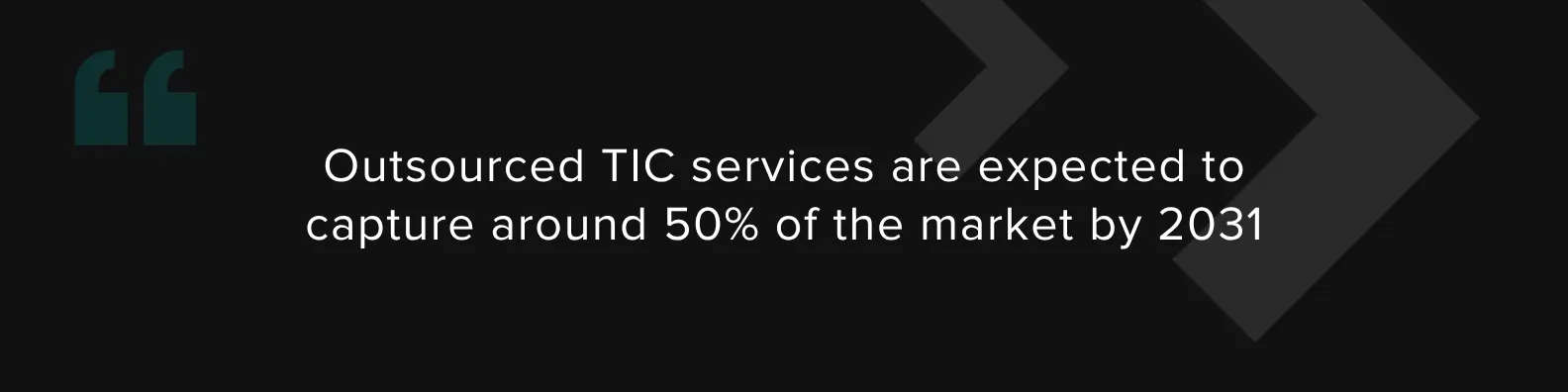
Outsourced TIC services are expected to capture around 50% of the market by 2031, growing faster than internal testing functions. This is because companies are moving away from in-house testing and toward third-party TIC providers to reduce fixed costs and access specialist equipment, which allows businesses to scale testing activity more flexibly while avoiding the cost of maintaining internal labs.
Regulation is becoming more technical and demanding, with a clear shift towards mandatory third-party verification. Businesses must now provide detailed evidence of safety, quality, and ethical compliance, particularly in areas such as AI and cybersecurity.
The EU AI Act introduces strict requirements for high-risk systems, with fines reaching up to €35 million for non-compliance, while updates to standards such as ISO 13485 are raising expectations in regulated industries. This is increasing demand for TIC roles that combine technical expertise with regulatory knowledge and accountability.
Engineering Managers are becoming increasingly important as TIC labs adopt new technologies and connected systems. The role now focuses on improving the full testing process, data flow, and operational efficiency of a laboratory.
Businesses require leaders who can combine technical knowledge with commercial understanding, particularly when making decisions around major investments in automated testing infrastructure. Strong systems thinking and the ability to improve speed, accuracy, and client delivery are becoming essential skills in modern TIC recruitment.
The role of the Senior Test Engineer is shifting away from repetitive manual testing and toward advanced problem-solving and automation oversight. As AI-driven testing tools become more common, businesses need engineers who can build and manage automated frameworks while identifying where systems may miss faults or structural risks. Many TIC jobs now require experience with software-driven testing environments, scripting languages, and automation tools, as well as the critical thinking required to validate AI-generated results.
Cybersecurity is becoming a major area of growth within the TIC sector as regulations around digital resilience and data protection continue to tighten. Businesses increasingly require specialists who can assess vulnerabilities and ensure compliance with regulations such as the EU AI Act and DORA. To avoid legal and financial consequences, these experts must bring technical security expertise while also keeping up to date with evolving regulations.
Sustainability experts are now central to ESG assurance and compliance activity as businesses face greater scrutiny around environmental claims. The role focuses on validating emissions data, conducting Life Cycle Assessments (LCA), and analysing Scope 3 supply chain impacts to ensure reporting withstands audits and regulatory review.
As greenwashing becomes a growing legal and reputational risk, businesses need specialists who can provide accurate, audit-ready data, making sustainability one of the fastest-growing areas within TIC roles in demand.
Certification Project Managers play a critical role in keeping products and systems moving through increasingly complex approval processes. They work with clients, engineers, regulators, and testing teams to balance commercial deadlines with technical and compliance requirements.
The role requires strong organisation, adaptability, and communication skills, particularly in fast-moving industries where delays to certification can directly affect revenue and product launch timelines.
Operations Directors are under increasing pressure to improve efficiency as TIC providers manage rising labour and energy costs. The role now focuses heavily on resource planning, operational performance, and deciding when testing activity should remain in-house or be outsourced to specialist partners. Businesses require leaders who can build flexible operating models while maintaining quality and profitability, making commercial awareness critical in senior TIC recruitment.
Certification is one of the fastest-growing areas of the TIC market, and Heads of Certification are responsible for protecting the accreditations that support the entire business. Losing a major accreditation can prevent a provider from operating in key markets, so governance and quality oversight are key responsibilities. The role is also becoming more digitally focused, with many organisations moving toward paperless systems and digitally verified certification processes.
With cybersecurity becoming increasingly critical within TIC, demand for senior leaders who can build and scale dedicated service lines is on the rise. Cybersecurity Managing Directors are responsible for developing commercial cybersecurity offerings that clients can buy as part of wider assurance programmes.
As TIC providers continue acquiring specialist cyber firms and expanding digital assurance services, businesses need executives who can lead teams, integrate new capabilities, and build trust in increasingly complex digital environments.
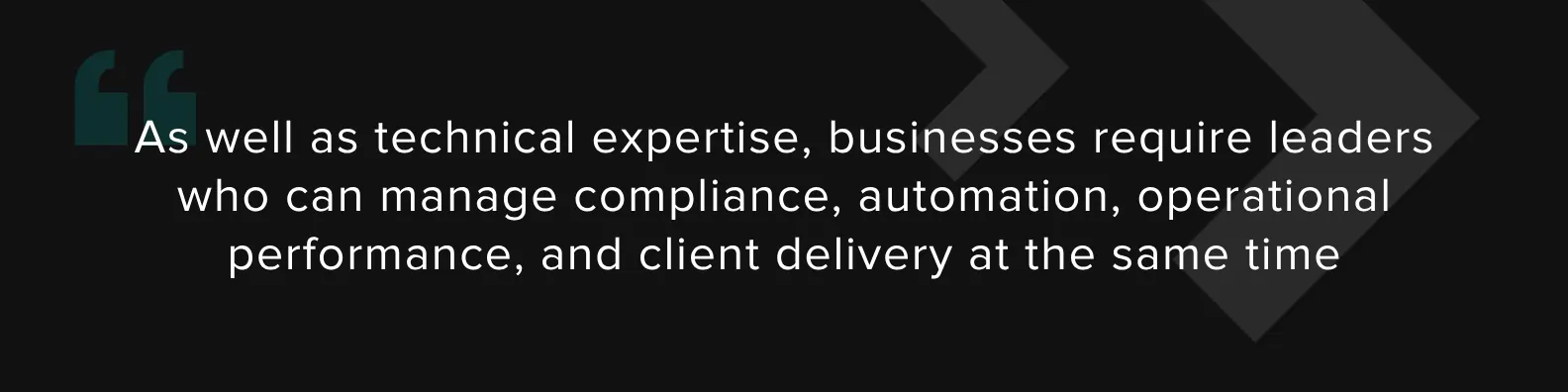
As the TIC market becomes more regulated and digital, competition for experienced professionals is continuing to increase. As well as technical expertise, businesses require leaders who can manage compliance, automation, operational performance, and client delivery at the same time.
At CSG Talent, our TIC recruitment specialists provide organisations with access to senior-level talent with the technical, commercial, and leadership capabilities required to support long-term growth. Our executive search experts take a consultative recruitment approach to connect exceptional talent with some of the fastest-growing businesses in the TIC industry.
Contact our TIC executive search experts to secure the industry specialists shaping the future of TIC.