Drop off your CV
We'd love to hear from you. Send us your CV and one of our specialist consultants will be in touch.



In the current talent market, access to high-quality talent is increasingly shaped by the candidate experience. Senior professionals often have multiple opportunities available to them at once, and they pay close attention to what the hiring process itself reveals about leadership quality, decision-making, and culture.
As a result, businesses facing skills shortages and increased competition for senior talent must be far more strategic about how they engage and communicate with candidates.
In this article, we explore the core hiring challenges businesses are facing and discuss how improving candidate experience can help attract high-calibre talent and strengthen hiring decisions.
Contact CSG Talent to improve your candidate experience and secure top leadership talent.
A shortage of senior-level talent is one of the biggest hiring challenges businesses face today. With 77% of employers reporting difficulty filling roles, many organisations are competing for the same limited pool of candidates.
As industries evolve, job requirements have become more specialised faster than talent pipelines can keep up. Many organisations continue to search for candidates who already have a complete skillset rather than those with the ability to adapt, learn, and grow into the role. Because of this, the market feels particularly short on talent, while capable candidates are overlooked because they do not match a strict job specification. This is where we are increasingly seeing businesses adopt a skill-first approach to hiring.
Counteroffers have become more common as businesses increase their efforts to retain senior talent in the highly competitive market. Although many people believe counteroffers are accepted for financial reasons, this isn’t necessarily the case.
Candidates who are not fully excited or convinced by a new role are significantly more likely to accept a counteroffer, making engagement a crucial aspect of the recruitment process. When purpose, progression, and long-term opportunities are not clearly defined from the start, a candidate is more likely to view a counteroffer as the safest option to avoid uncertainty.
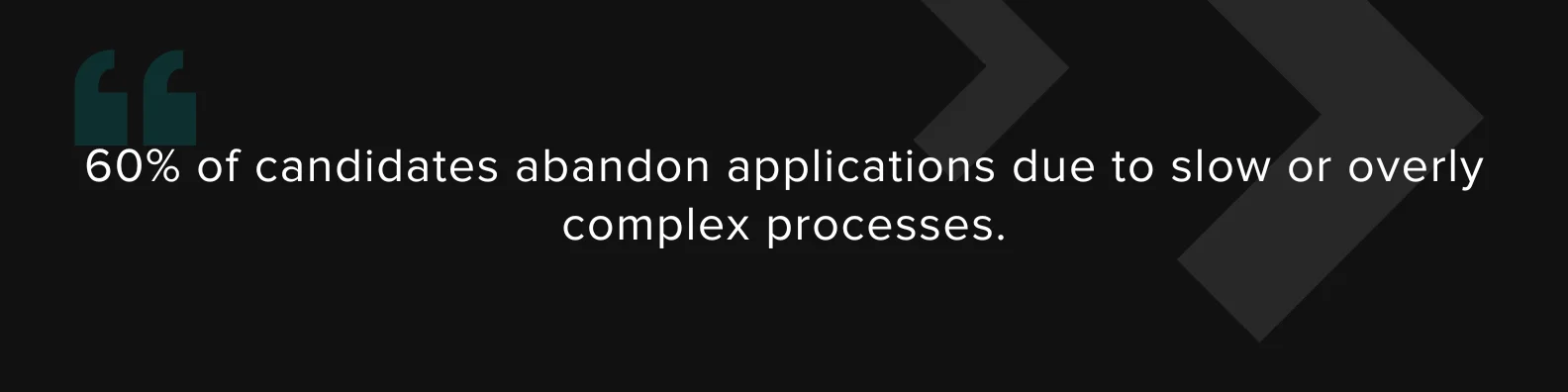
Prolonged hiring processes are one of the most self-inflicted recruitment challenges. 60% of candidates abandon applications due to slow or overly complex processes, yet many organisations still underestimate the impact of delays. The longer a process takes, the more time there is for doubt to creep in and other opportunities to arise.
Lengthy processes suggest indecision, and candidates often view slow feedback as a lack of genuine interest in hiring them. In competitive markets, employers who demonstrate pace and transparency are far more likely to successfully secure their ideal candidate.
Although salary is still an important factor, today’s candidates place greater value on how organisations communicate, how decisions are made, and how transparent the process feels. 72% of job seekers expect clear communication and feedback, and if that expectation is not met, confidence in the employer decreases. Candidates are more likely to disengage because of the process creating uncertainty, rather than the role not suiting them.
As this group of professionals will only consider roles that genuinely represent progress, engaging them requires credibility and a positive employer brand, which partnering with an executive search partner can support.
Cultural alignment and inclusion play a significant role in this, as 76% of job seekers consider D&I when evaluating opportunities. A hiring process that demonstrates fairness and respect builds trust, which is particularly important for attracting passive candidates who are not actively looking to leave their existing role.
Senior candidates are not just evaluating the role but the organisation itself, so a slow process can reduce enthusiasm and give competing businesses an advantage. By streamlining your hiring process, you remove unnecessary steps and ensure candidates experience a process that feels purposeful and respectful of their time. This makes your organisation more appealing to senior professionals who have multiple options on the table and directly improves your ability to secure the talent you need.
Clear communication is one of the most overlooked ways to improve hiring outcomes, with 81% of candidates saying regular updates improve their perception of an employer. Timely and specific feedback demonstrates professionalism and respect, even when the outcome is not favourable. When candidates understand why a decision was made, they are far more likely to remain positive about the experience, which improves your reputation in the competitive talent market.
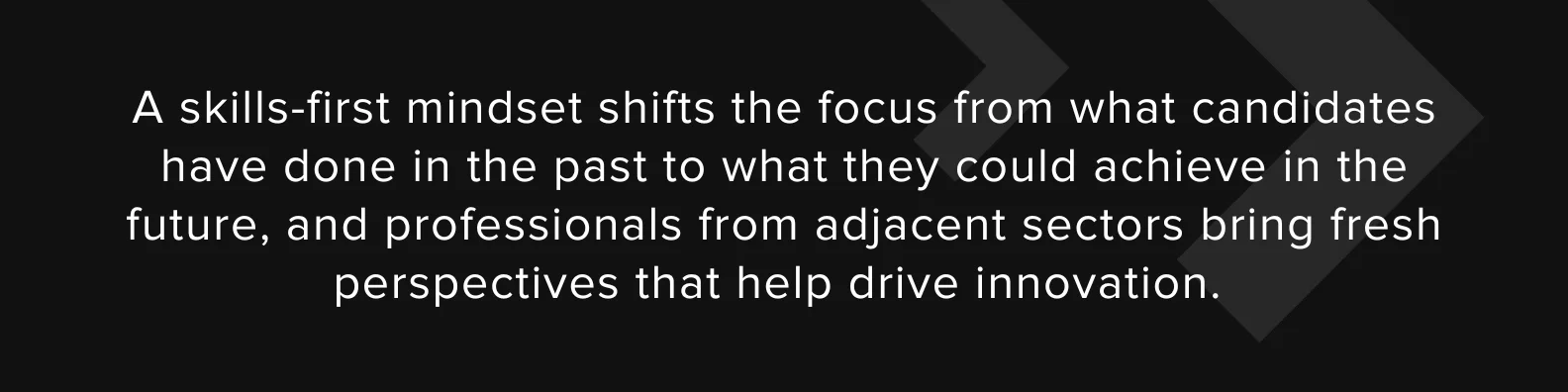
In today’s competitive talent market, traditional experience requirements can limit access to the best candidates. A skills-first mindset shifts the focus from what candidates have done in the past to what they could achieve in the future, and professionals from adjacent sectors or roles bring fresh perspectives and skillsets that help drive innovation. At the same time, investing in upskilling your existing teams reduces reliance on external recruitment while improving retention.
From a hiring perspective, combining a skills-first approach with internal development creates flexibility, as you are no longer limited to candidates who meet every requirement on day one and can secure talent whose skillsets will continue to grow. When competing for senior professionals, this strategy expands the pool of high-calibre candidates and increases your chances of hiring individuals who will thrive long-term.
67% of candidates say salary transparency and benefits strongly influence acceptance, so it’s important to clarify the full value proposition from the start, including compensation, benefits, flexibility, and development opportunities. Candidates who fully understand the offer are far more likely to commit with confidence, reducing the chances of counteroffers or late withdrawals.
Regular and clear communication is one of the most crucial elements of a positive candidate experience. You should be explicit about what to expect at each interview stage, who is involved, and when decisions will be made, as candidates who are left guessing often assume that they are no longer being considered. To avoid this, agree internally on realistic interview timelines and if those timelines change, communicate that transparently.
Every stage of your hiring process should have a clear purpose, as long and repetitive processes can frustrate candidates, create uncertainty, and signal a lack of alignment within the business. A well-structured process shows candidates that you respect their time and can make important decisions. In a competitive market, this can be the difference between securing senior-level talent and losing them to an employer with a more streamlined process.
Interviews are a chance for candidates to assess how your business operates and the strength of your leadership team. When interviewers arrive underprepared, it raises questions about decision-making, accountability, and internal communication.
You can strengthen this stage by ensuring every interviewer understands the role brief, the outcomes you are hiring for, and what has already been explored in earlier conversations. As well as improving the candidate experience, this leads to more purposeful conversations that help improve your decision-making.
Most candidates will not receive an offer, but they will all leave with a lasting impression of your organisation. How you communicate decisions significantly impacts your employer brand, as poor communication and vague feedback leaves unsuccessful candidates feeling disrespected.
A well-managed end to the process shows professionalism and signals that your business values people’s time and effort, and this reputation matters more than ever in a market where candidate networks are vast and information travels quickly.
Once an offer has been accepted, it’s important to understand that the hiring decision is not fully complete. There is still a risk of losing the candidate during the notice period, especially in competitive markets where counteroffers are common. Maintaining a positive experience and consistent communication helps keep the candidate engaged, committed, and ready to hit the ground running once they start their new role.
At CSG Talent, our executive search specialists understand that candidate experience plays a critical role in attracting and securing senior-level talent. We partner closely with our clients to design well-structured hiring processes, proactively engage skilled professionals, and maintain consistent communication throughout every stage of the search.
Contact CSG Talent for support attracting and engaging senior-level talent.